🇬🇧
Research by
Advertisements: Forte Pianos of the Low Countries
I-Hendrik Blatz /Bletz/ Blotz / Boets (ca. 1733–1777)
From Amsterdam Hammer-Action to Caribbean Organ Building: Unravelling Hendrik Blatz (c. 1733–1777)
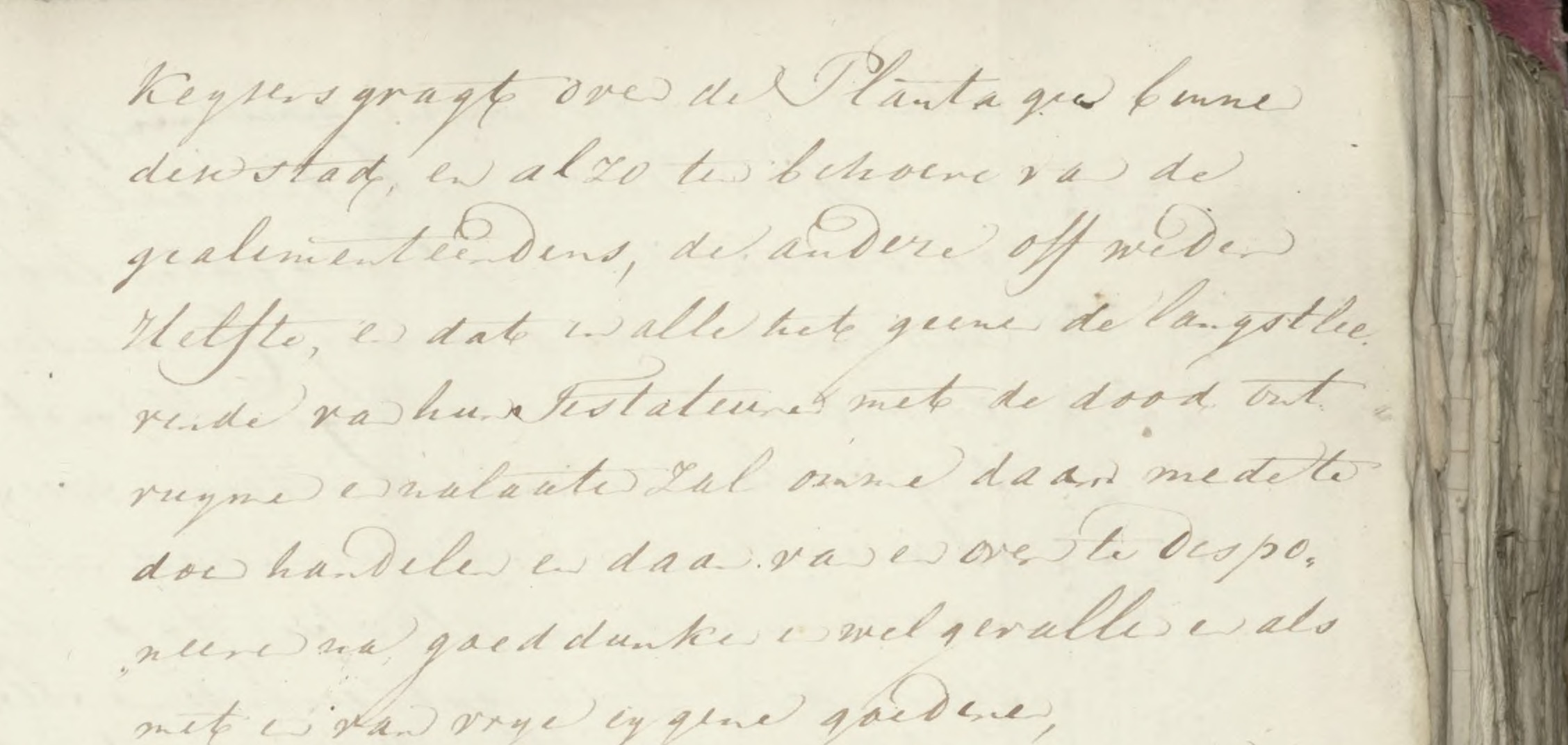
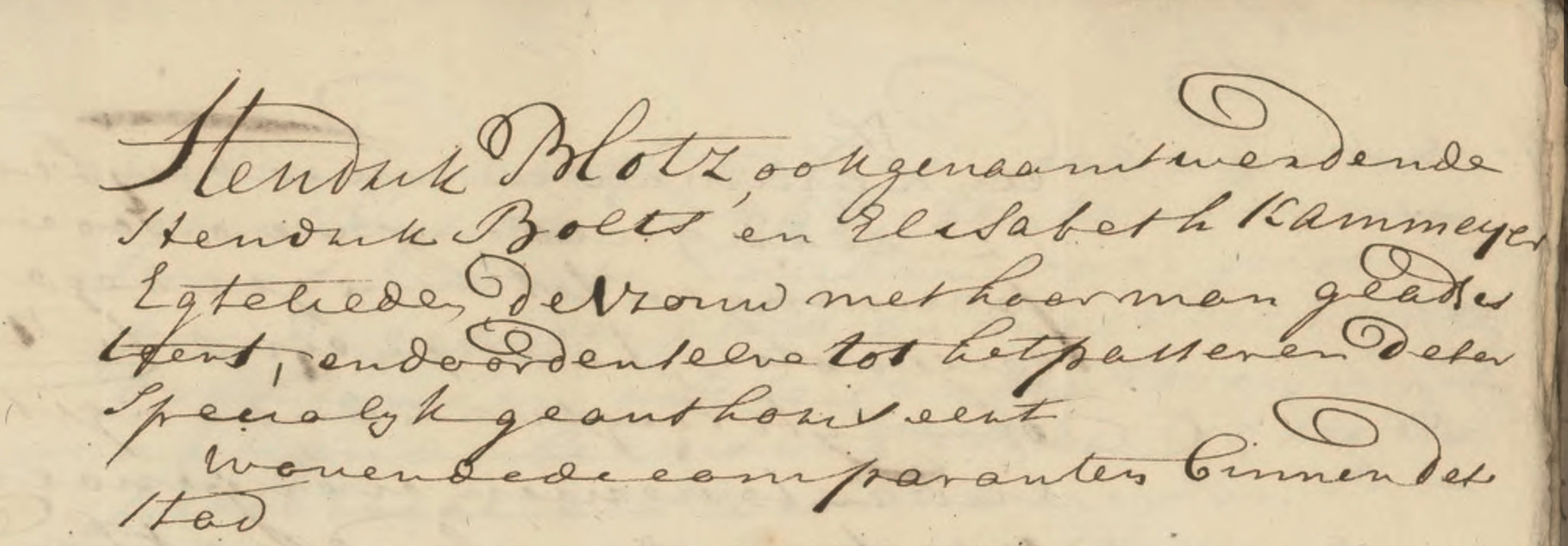
Anyone searching eighteenth-century archives for the pioneers of musical instrument building often encounters variations in spelling. The name of one specific master instrument maker appeared over the years under various guises: Blatz, Blotz, Bletz, and even Boets. Thanks to recent archival discoveries, we now know precisely who he was: Hendrik Blotz, born around 1733 in Wrisbergholzen (Germany), who established himself in Amsterdam as a master organ builder and passed away in January 1777 at just 43 years of age.
The story of his pioneering work begins on July 15, 1758, when a landmark advertisement appeared in the Amsterdamsche Courant:
"HENDRIK BLATZ, Organ Builder in the Baangragt, between the Spiegel- and Reguliersgragt in Amsterdam, presents for sale out of hand two superbe Forte Piano, being hammer-action, with an extra-fine tone and rare inventions."
This is recognized as the earliest documented offering of a fortepiano in the Low Countries. Blatz was not only an innovator in hammer-action keyboard building, but also worked on major city instruments in Amsterdam, including the organ of the historic Oude Kerk.
His reach, however, extended even further across the globe. In October 1764, under the name Hendrik Blots, he built a large pipe organ shipped across the Atlantic to the Reformed Church in Curaçao. Subsequent records—including his 1759 marriage entry to Elisabeth Kammeyer and a 1772 proxy—firmly link all these spelling variations to one and the same master.
The life of Hendrik Blotz (1733–1777), his instruments, and complete archival records


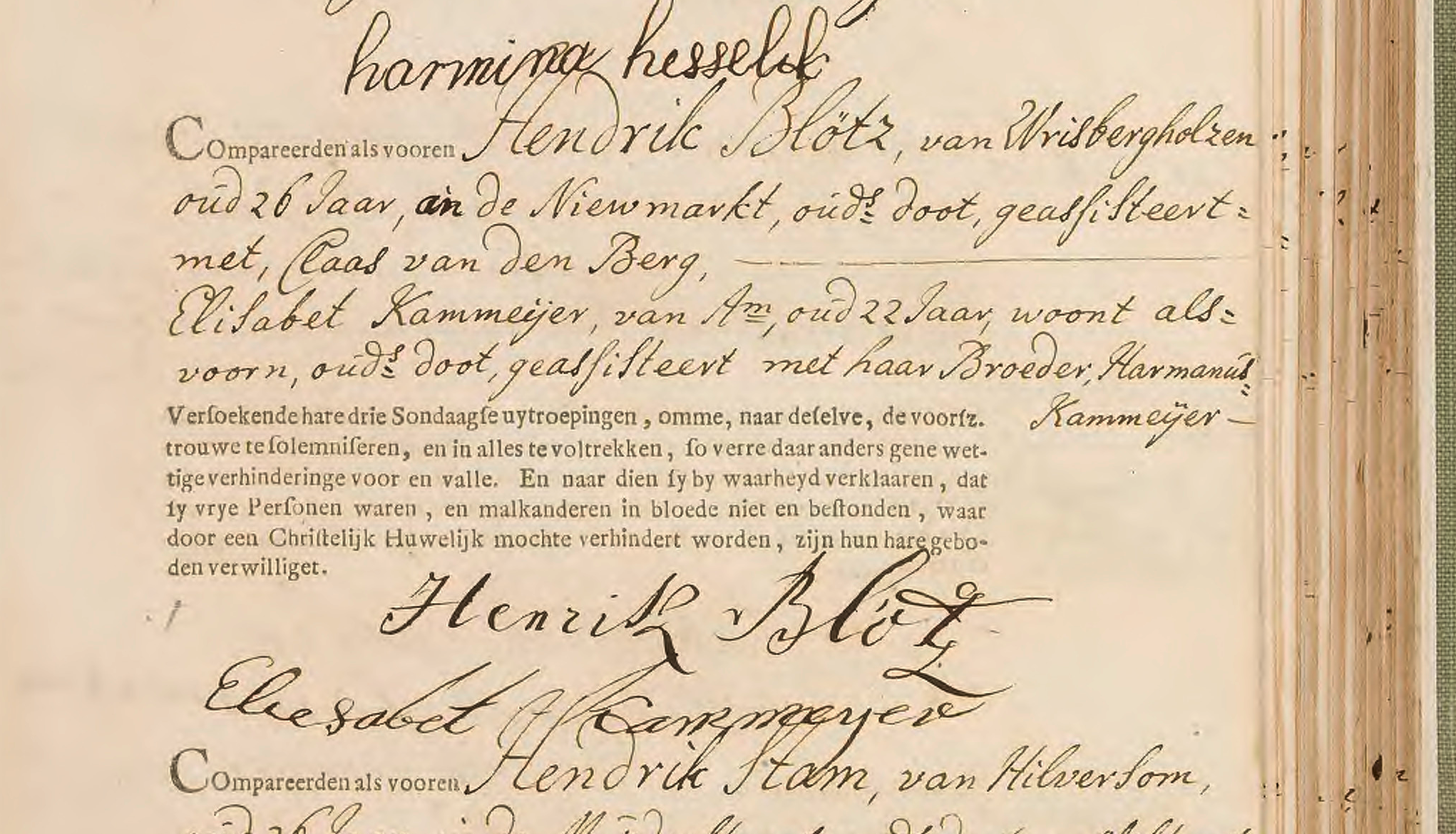
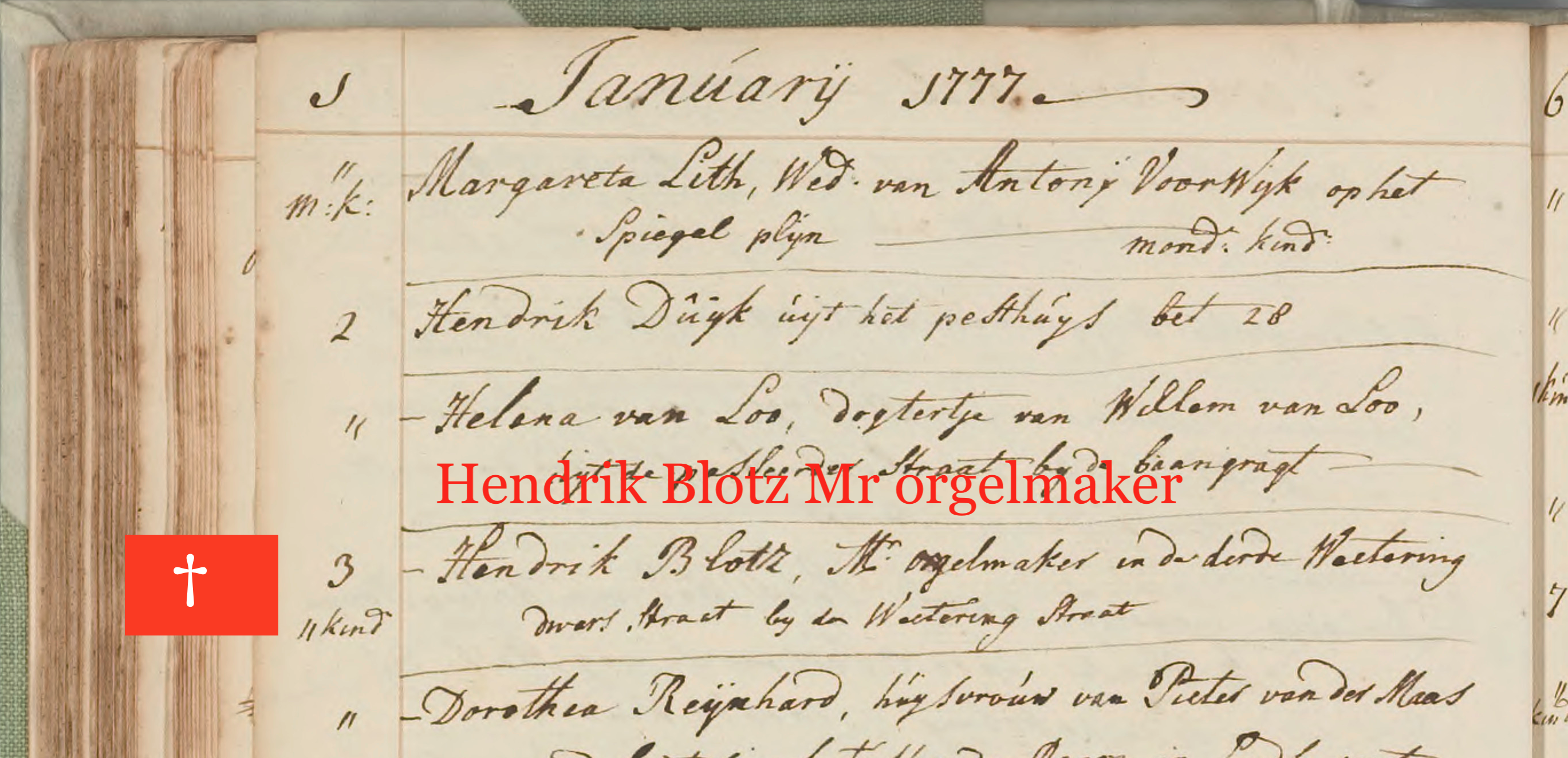
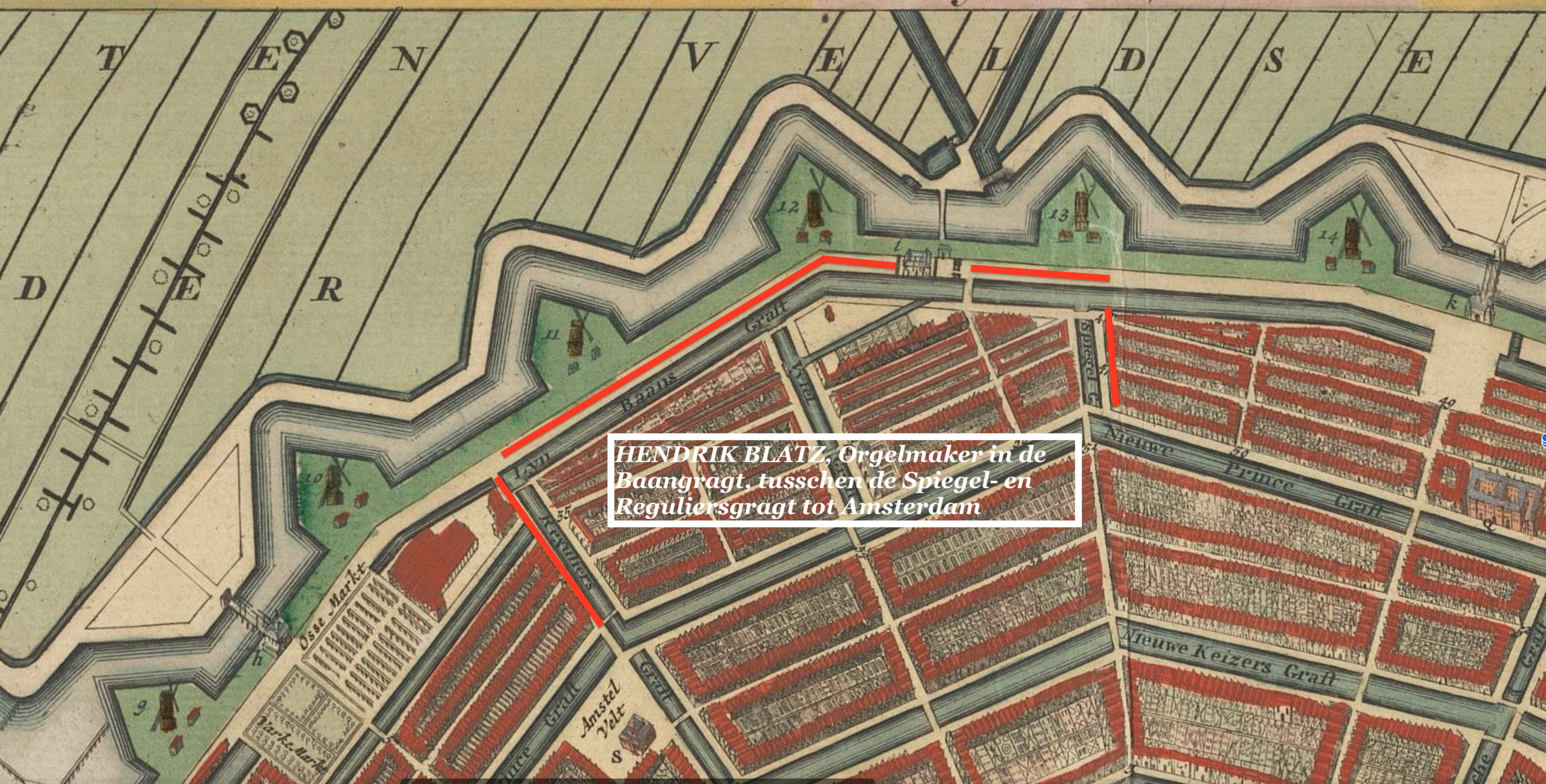
II - Andries Veltman, 1759.
In 1759, ‘Weltman’ presented the Académie in Paris with a harpsichord featuring both jacks and a hammer mechanism.
III - Johannes Lodewijk Dulcken, 1775
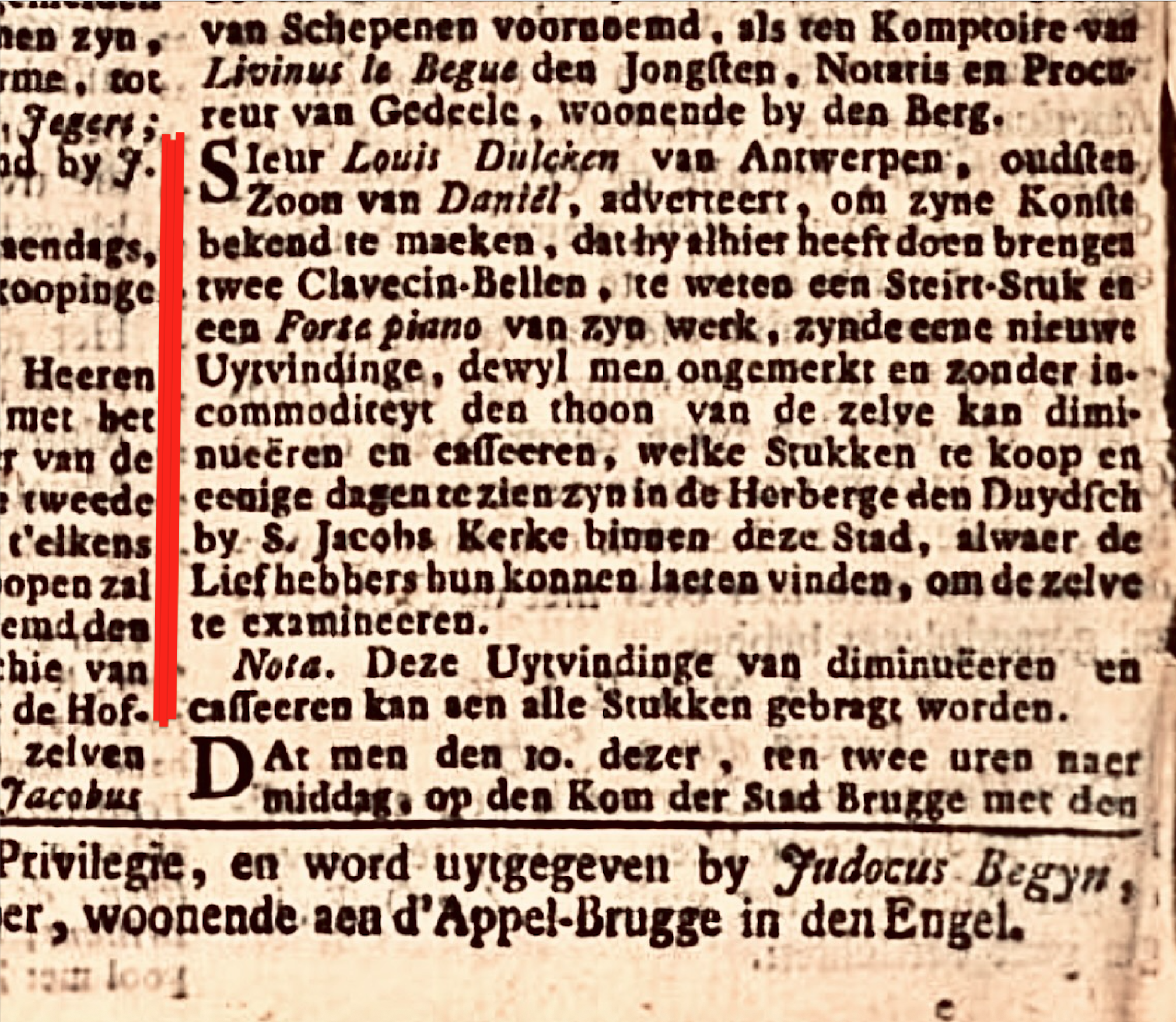
6 July 1775: in the Ghent Gazette,
‘Sieur Louis Dulcken of Antwerp’, the eldest son of Daniël, advertised a Steirt instrument and a ‘Forte piano’ of his own design, featuring a new invention for softening and amplifying the tone. That was four years before Meijer set up in Amsterdam.
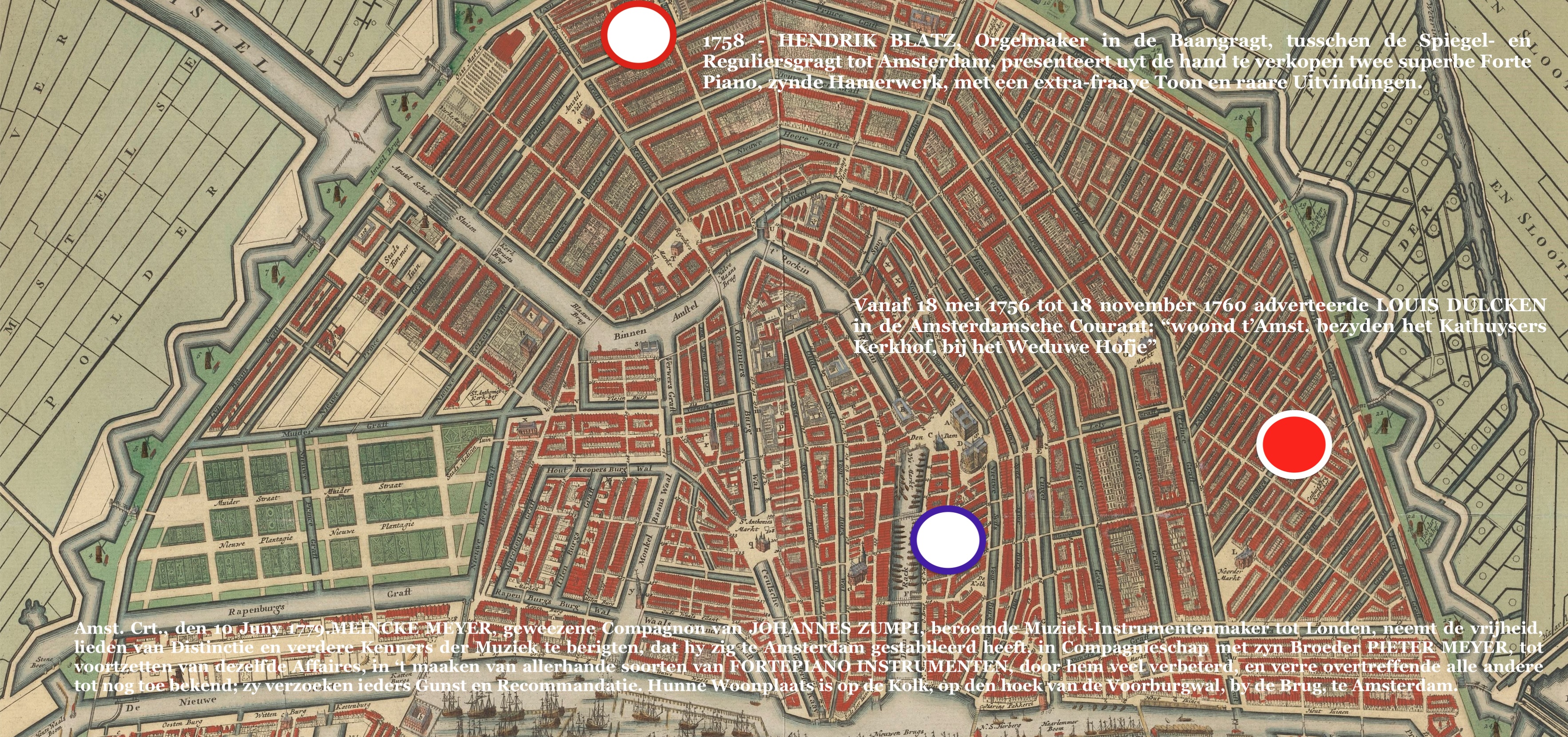
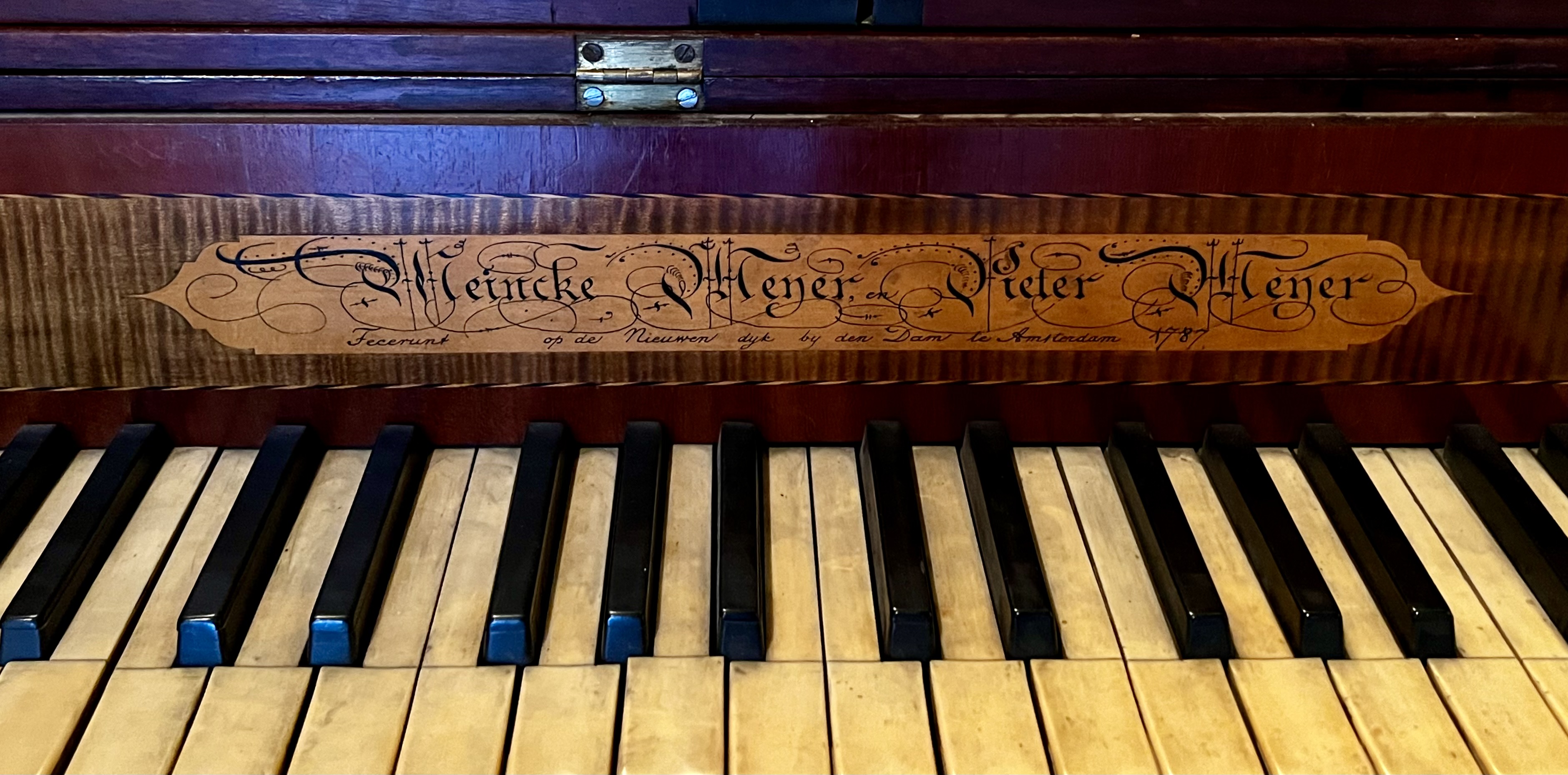
V - Meincke & Pieter Meyer, 1779

Amsterdam, 10 June 1779.
MEINCKE MEYER, former partner of JOHANNES ZUMPI, famous maker of musical instruments in London, takes the liberty to inform people of distinction and other connoisseurs of music, that he has established himself in Amsterdam, in partnership with his brother PIETER MEYER, to continue the same business, in making all kinds of FORTEPIANO INSTRUMENTS, much improved by him, and far exceeding all others known so far; they request everyone's favour and recommendation. Their place of residence is on the Kolk, on the corner of Voorburgwal, by the Brug, in Amsterdam.
The brothers Meincke and Pieter Meyer are early piano builders in Amsterdam whose instruments have survived. Their year of birth and death are not known. Meincke worked in London before 1779 as an associate of the famous Saxon-born Johannes Zumpe. Zumpe had set up his own workshop there in 1761. that turned out to have been a hit. After the better circles in London had accepted the little unknown instrument, demand grew to such an extent that one could speak of an explosive development. Zumpe was able to attract several collaborators, such as Meincke Meijer. Two pianos, from 1776 and 1778, recall their collaboration. No doubt Zumpe will have tried to expand his sales area, especially to the Netherlands. Meincke must have known about the growing demand in Amsterdam, because in 1779 he announced by advertisement that he had established himself in partnership with his brother Pieter.
Among the Meyer piano makers, two distinct generations can be identified. The other generation was born around 1735–1745. This group includes:
I - Meincke Meyer
II - Pieter Meyer
III - Joachim Andreas Meyer ( Father of Hilmer Meyer and Andreas)
IV - Hendrik Anthonie Meyer (1745 - † 1812)
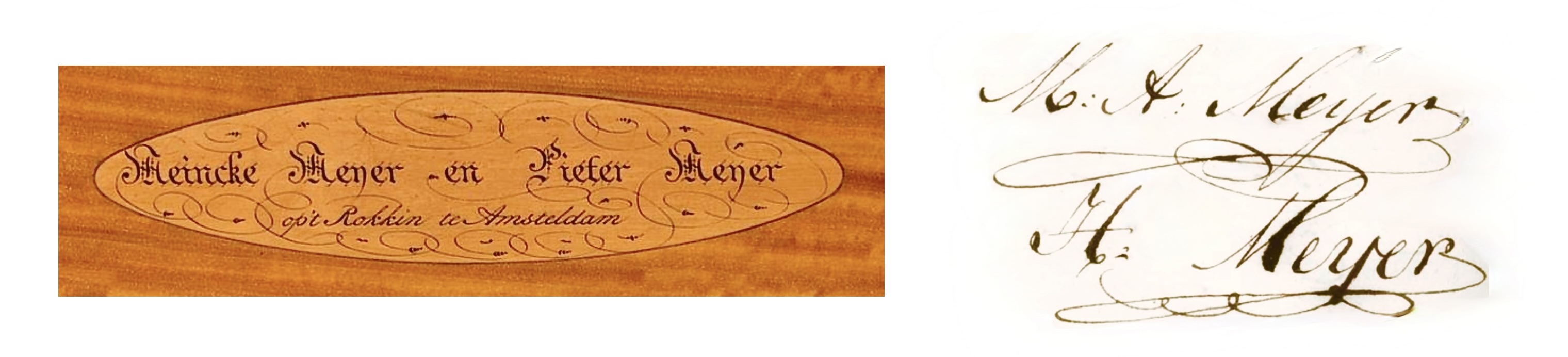
Tot de jongere generatie (geboren na 1767) behoren: V - Meincke Andries Meyer Meinecke (Michael) Andries (Andreas) Meyer Born: London 1767)
VI - Jan Lodewijk Meyer Jan (Johan) Lodewijk Meyer (Born: London 1772) John Ludowyk Meyer - John Ludwich Meyer - John Ludwig Meyer - John Ludwich Meyer
VII - Hilmer Meyer Hilmar Meyer - Born Hittfeld: Januar 1773 – died: Amsterdam 20. August 1816)
VIII - Andreas Meyer born 15 October 1775 in Hittfeld near Hamburg. Brother of Hilmer Meyer
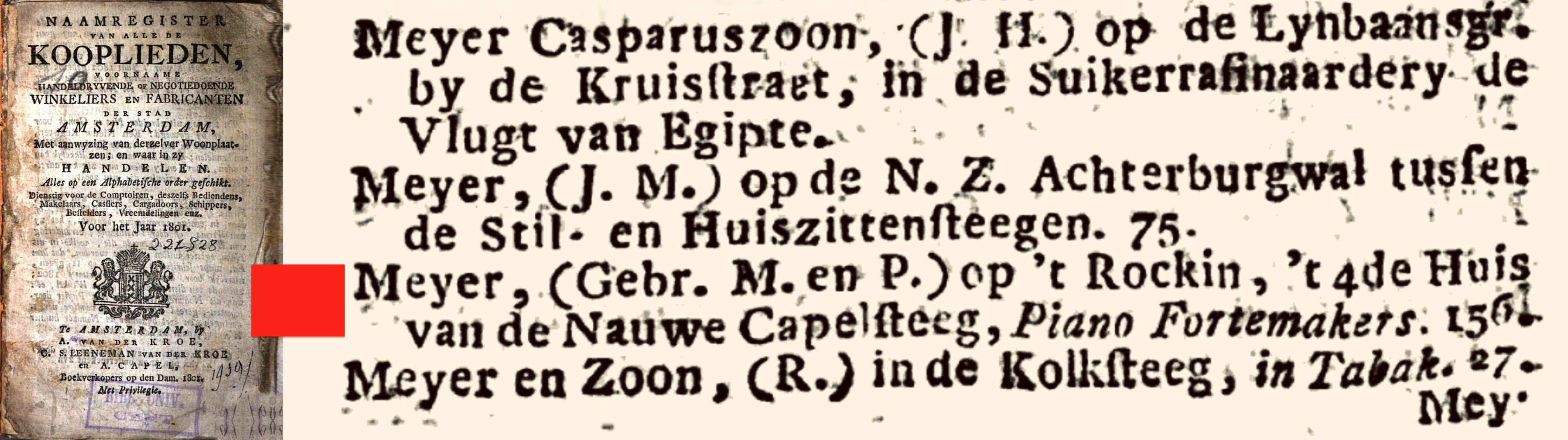
Meyer, (Gebr.M.en P.) op ’t Rockin, ’t 4 de Huis van de Nauwe Capelsteeg, Piano Fortemakers.156
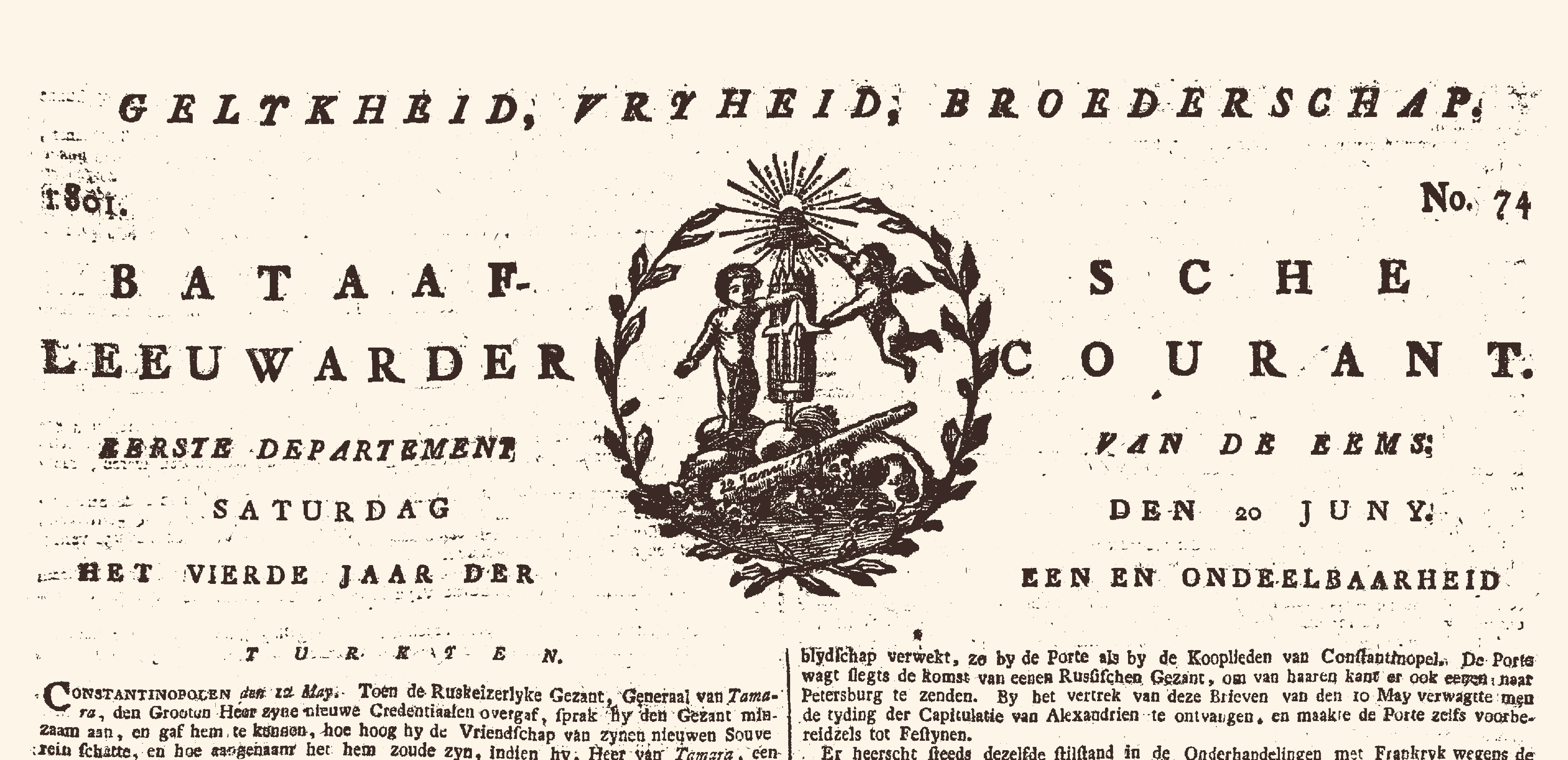
NAAMREGISTER VAN ALLE DE
KOOPLIEDEN,
VOORNAAME
HANDELDRYVENDE OF NEGOTIEDOENDE
WINKELIERS EN FABRICANTEN
DER STAD
AMSTERDAM
Met aanwijzing van dezelve Woonplaatzen;
en waar in zy HANDELEN.
Voor het Jaar 1801.
Johann Christian Bach played a Zumpe instrument publicly and may have acted as a sales agent for Zumpe pianos Johann Christian Bach 1735-1782 Sonate G-Dur - Allegro & Tempo di Menuetto
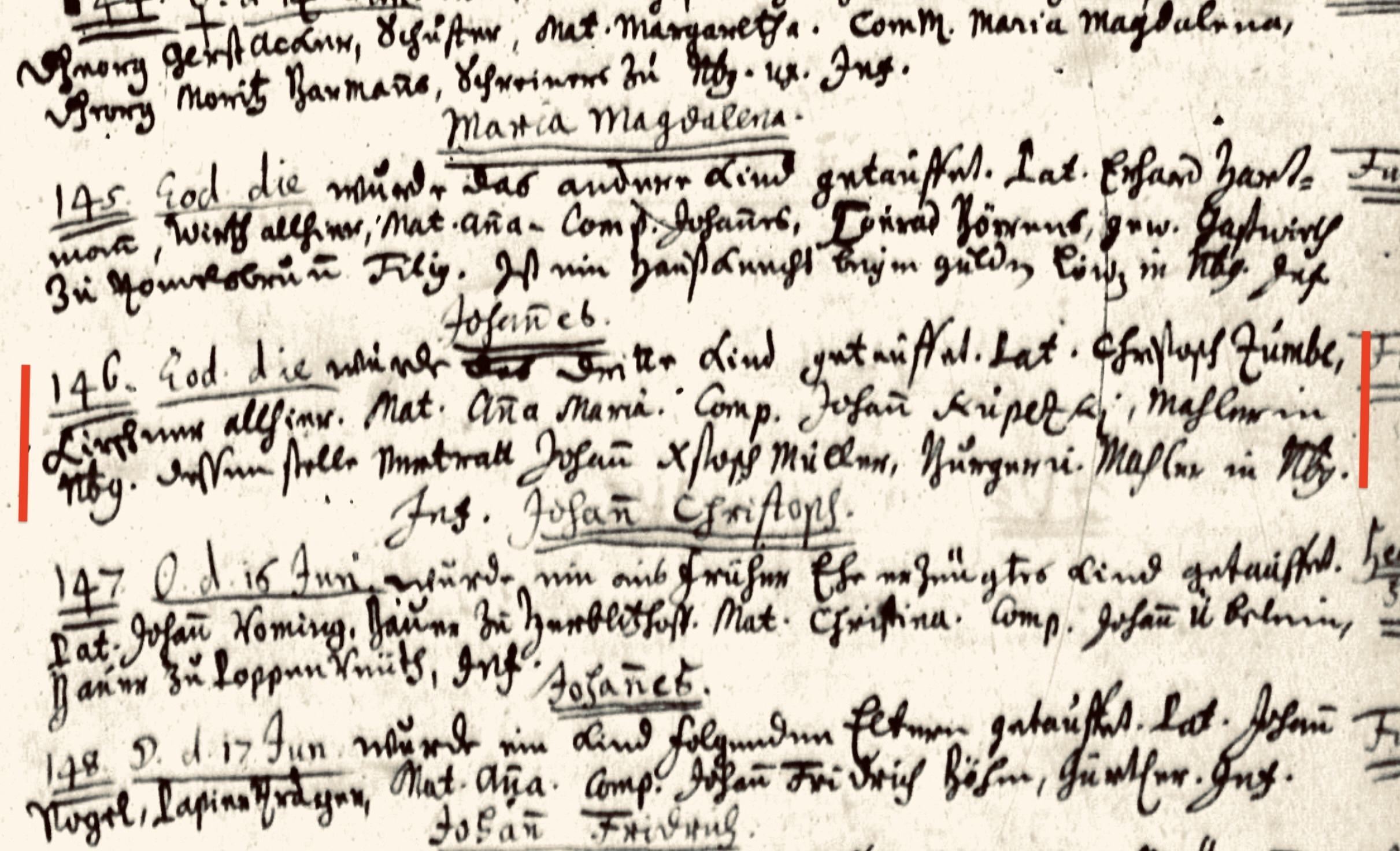
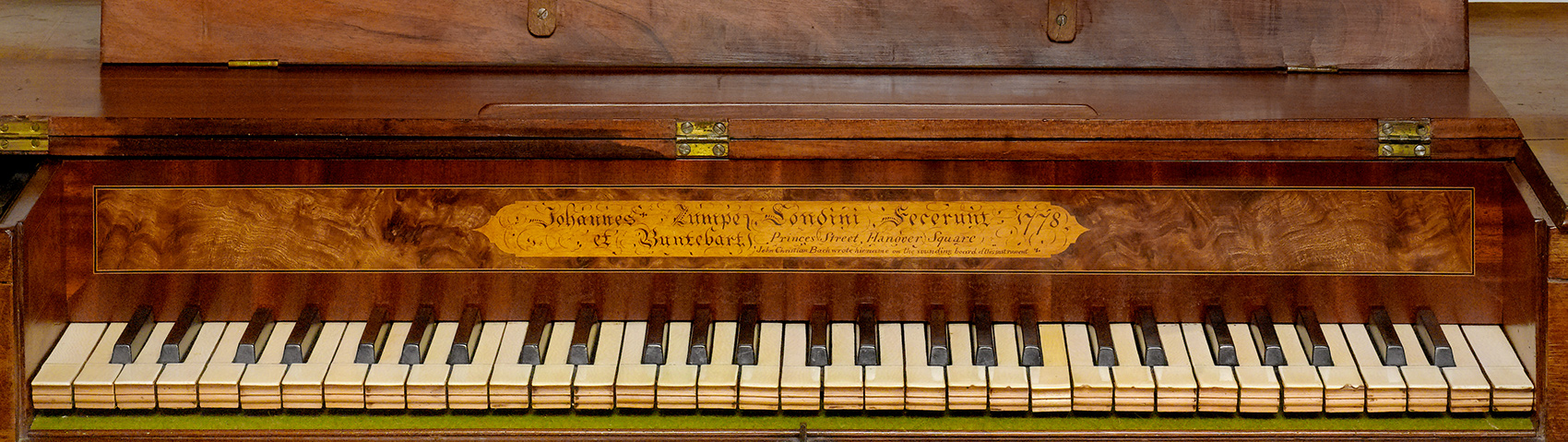

Zumpe received his training under Gottfried Silbermann. He was one of the German keyboard instrument makers who fled to London during the Seven Years' War (1756–1763). He worked briefly for Burkat Shudi before opening his own shop, "at the sign of the Golden Guittar," on Princes Street, Hanover Square, in 1761. On December 3, 1760, Zumpe married Elizabeth Beeston. His 1784 will lists his address as Queen Charlotte Row, in the parish of St. Mary-le-Bow. From 1769 until September 24, 1778, Zumpe was in partnership with Gabriel Buntebart. In 1778, Meincke Meyer joined Zumpe. A year later, on June 10, 1779, he placed an advertisement for his instruments in the *Amsterdamse Courant*, listing his residence as "de Kolk" in Amsterdam.
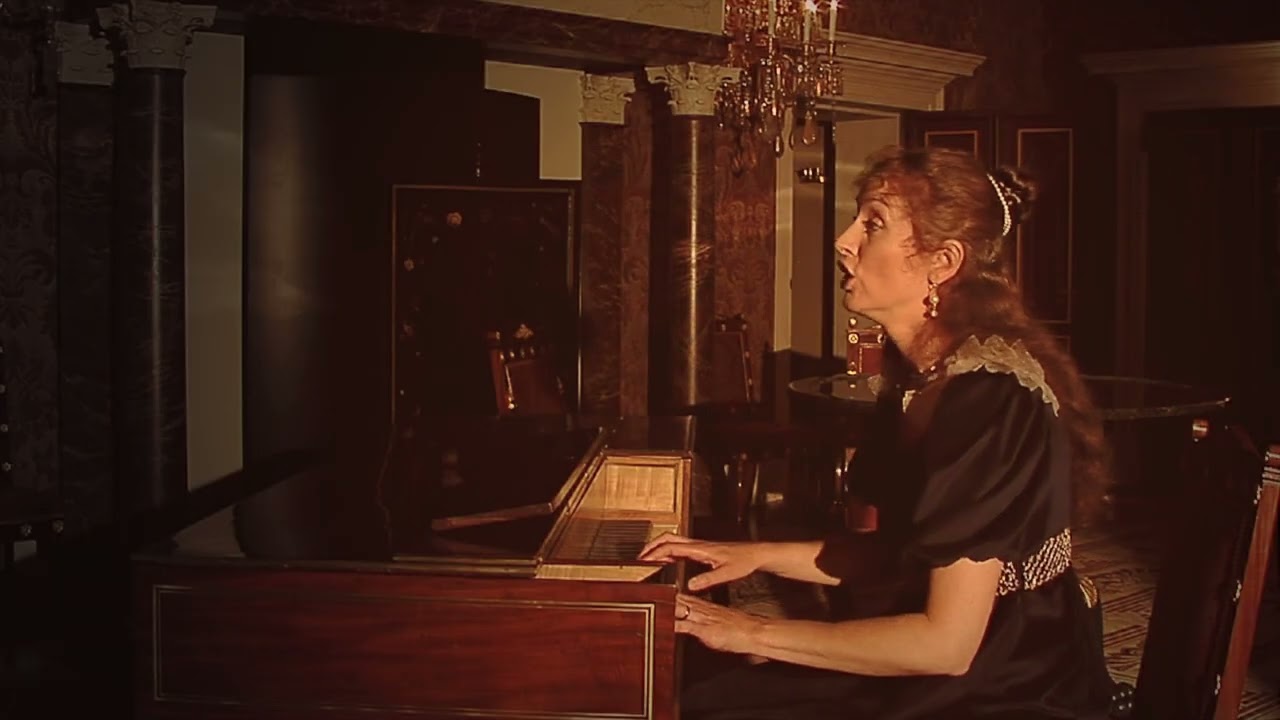
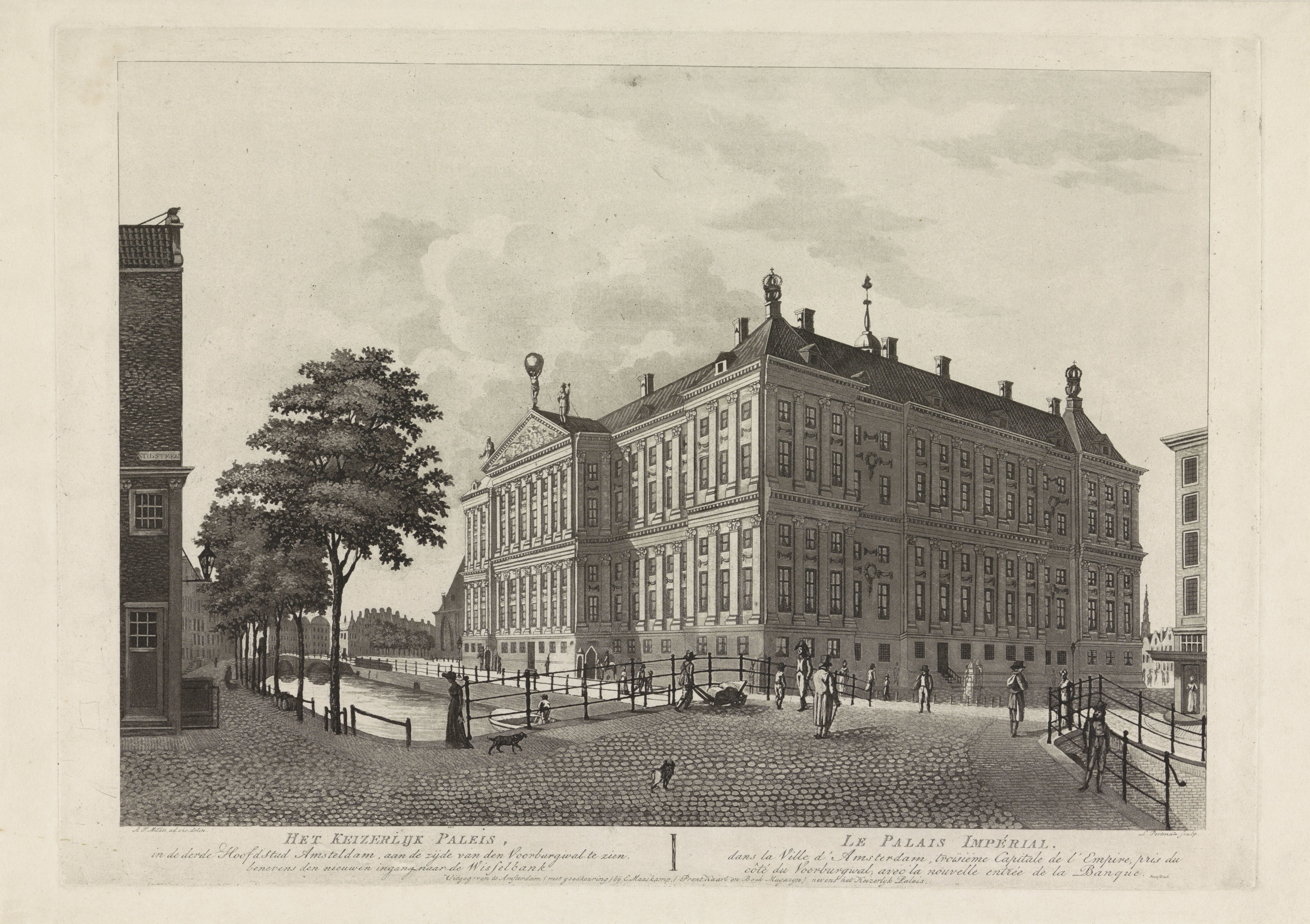
Click on the photo to hear the sound of the 1808 Meincke & Pieter Meijer piano. This recording was made at the Royal Palace on Dam Square in Amsterdam.
Meincke & Pieter Meyer, "Pianoforte Makers to Their Majesties"
Royal Palace Amsterdam - Meincke & Pieter Meyer
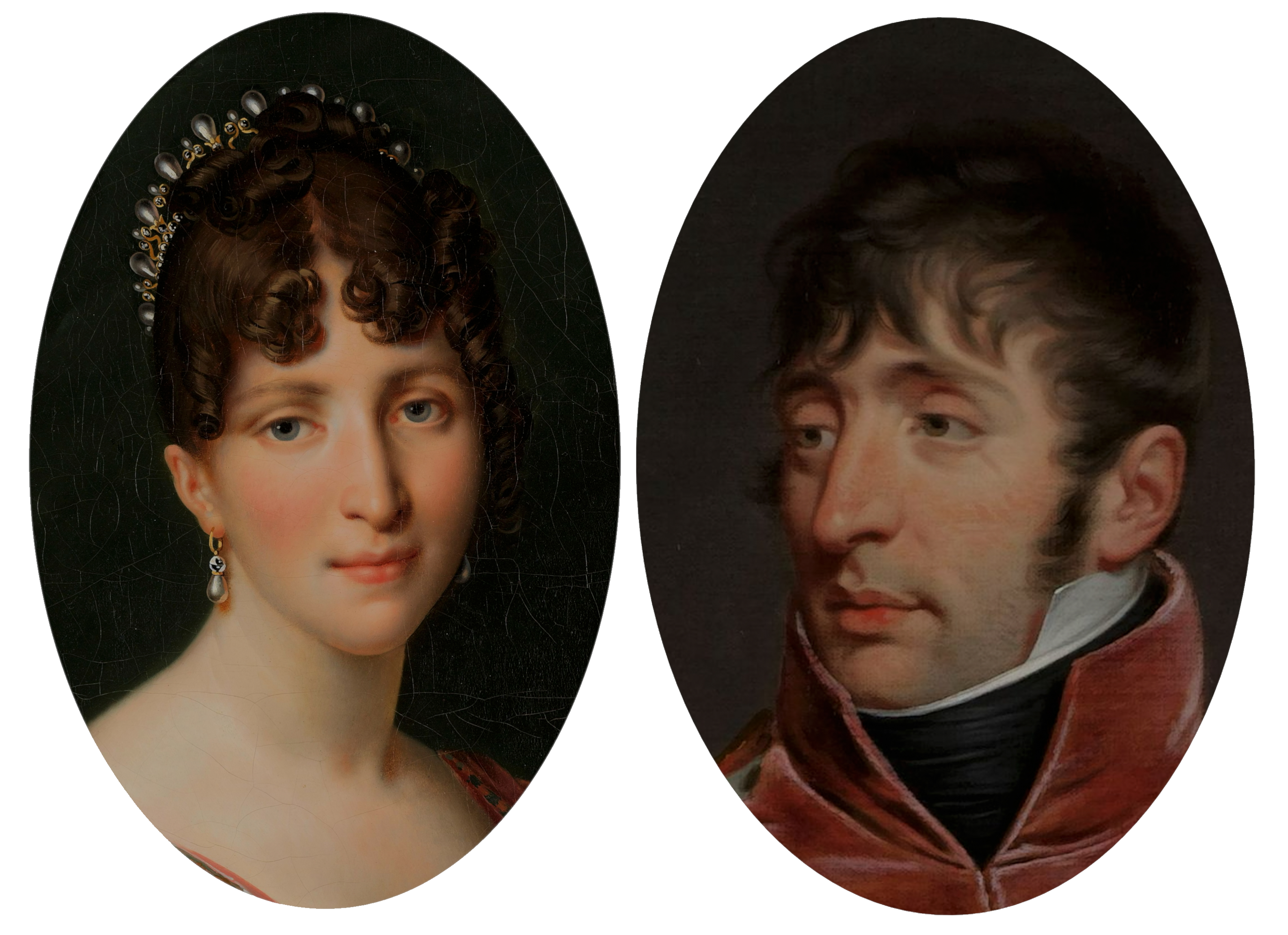
"Pianoforte Makers to Their Majesties"—that is, to Louis Bonaparte and Hortense de Beauharnais, the first King and Queen of Holland. In March 1809, the ledger of the Treasurer-General in the King’s service records a payment to the Meyer brothers for the supply of three fortepianos: two for the palace in Amsterdam (totaling 2,200) and one for the ‘Château de Soestdijk’ (totaling 450).
Royal Collections, The Hague, fragmentary archives of the Civil Household of King Louis Napoleon, inventory number G004-C-14.

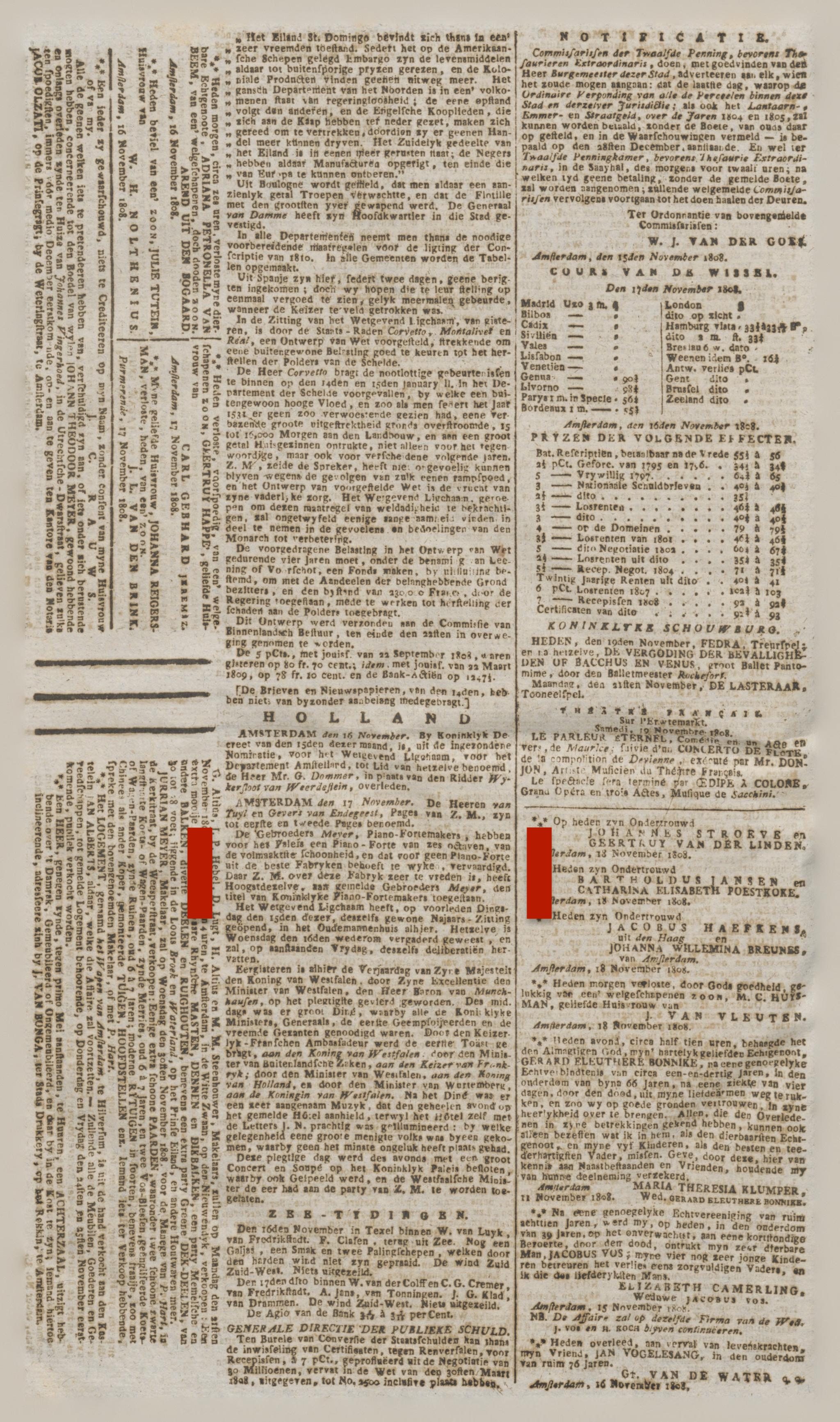
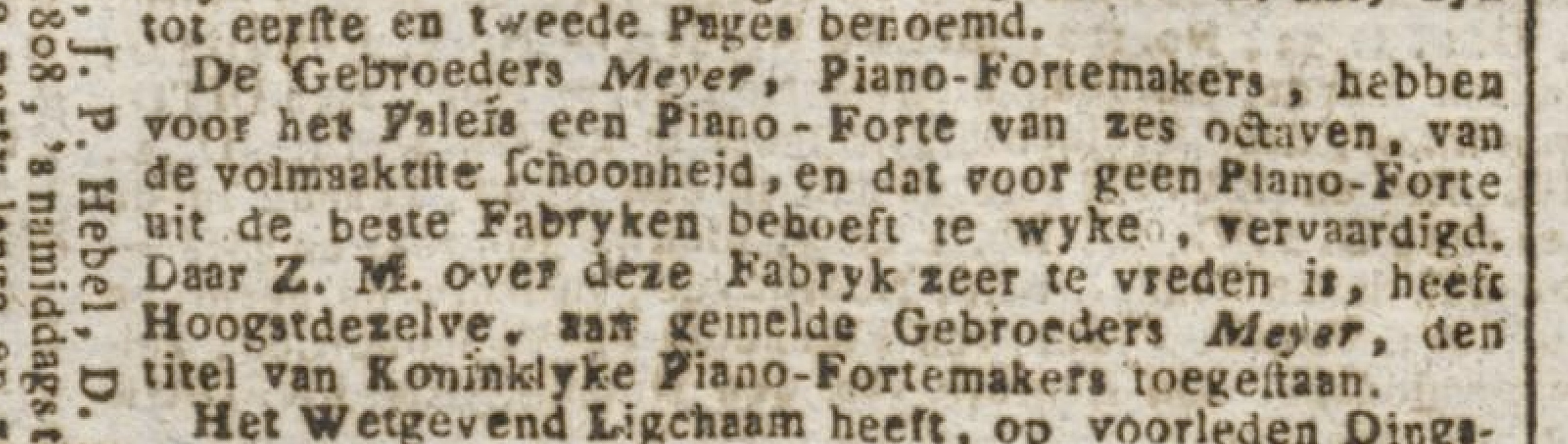
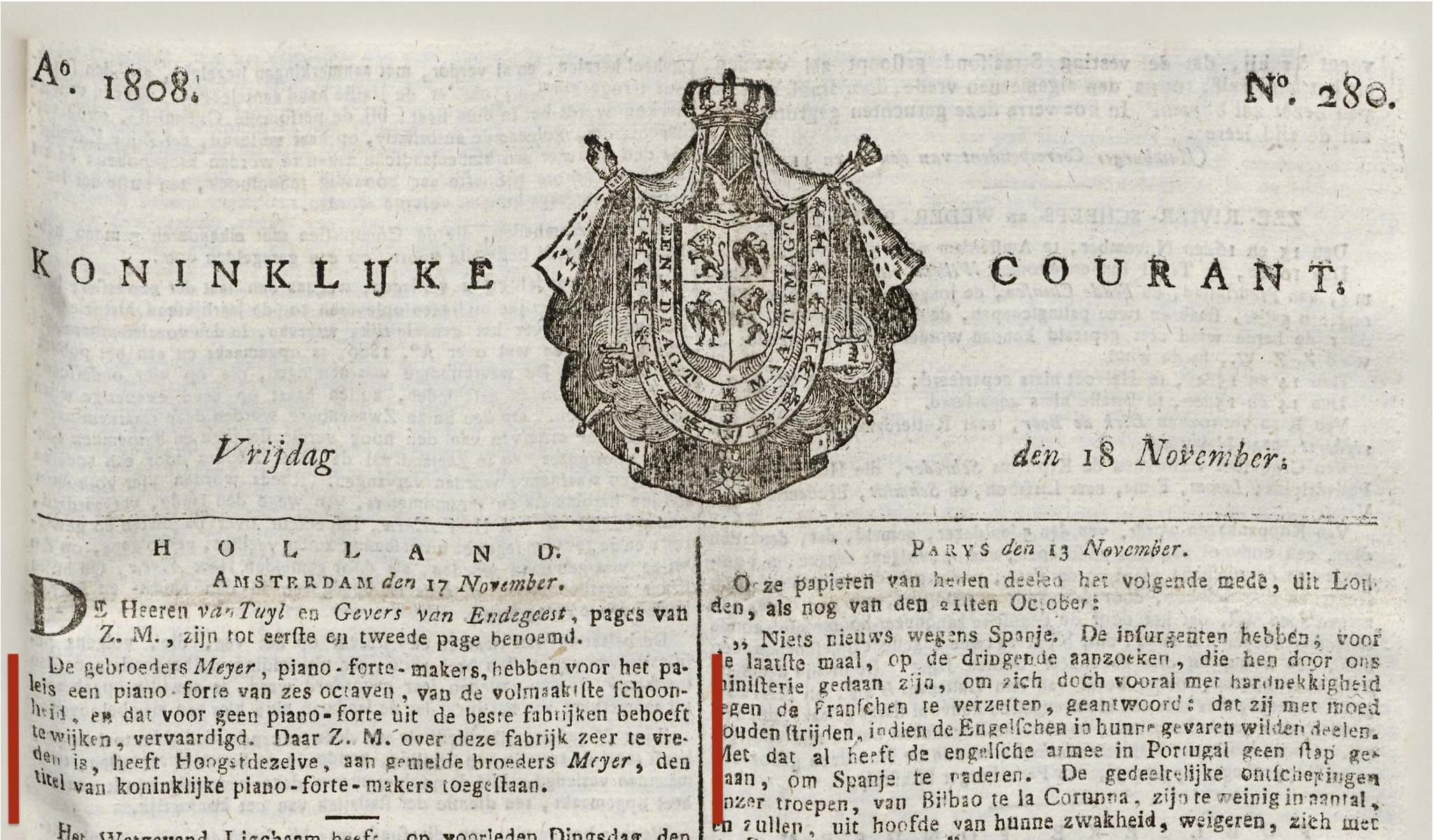
damsche Courant, 19/11/1808, p. 4
The Meyer brothers, piano-forte makers, have crafted a six-octave piano-forte for the palace—an instrument of the most exquisite beauty, which need not yield to any piano-forte from the finest manufactories. As His Majesty is highly satisfied with this work, he has seen fit to grant the aforementioned Meyer brothers the title of Royal Piano-Forte Makers.
Amsterdamsche Courant, 19.11.1808, S. 4
Die Gebrüder Meyer, Klavierbauer, haben für den Palast ein sechsoktaviges Klavier von vollendeter Schönheit gefertigt, das keinem Klavier der besten Manufakturen nachstehen muss. Da Seine Majestät mit dieser Manufaktur sehr zufrieden ist, hat er den Gebrüdern Meyer den Titel „Königliche Klavierbauer“ verliehen.
Amsterdamsche Courant, 19/11/1808, p. 4
De Gebroeders Meyer, Piano-Fortemakers, hebben voor het paleis een Piano-Forte van zes octaven, van de volmaaktste schoonheid, en dat voor geen Piano-Forte uit de beste Fabryken behoeft te wyke, vervaardigd. Daar Z. M. over deze Fabryk zeer te vreden is, heeft Hoogstdezelve, van gemelde Gebroeders Meyer, den titel van Koninklyke Piano-Fortemakers toegestaan.
QUEEN HORTENSE COMPLETE MOVIE - LA REINE D’HOLLANDE - ARENENBERG
QUEEN HORTENSE - LA REINE D’HOLLANDE - PALACE ‘T LOO ‘KUNSTZAAL’
QUEEN HORTENSE - LA REINE D’HOLLANDE - PALACE ‘T LOO ‘KUNSTZAAL’
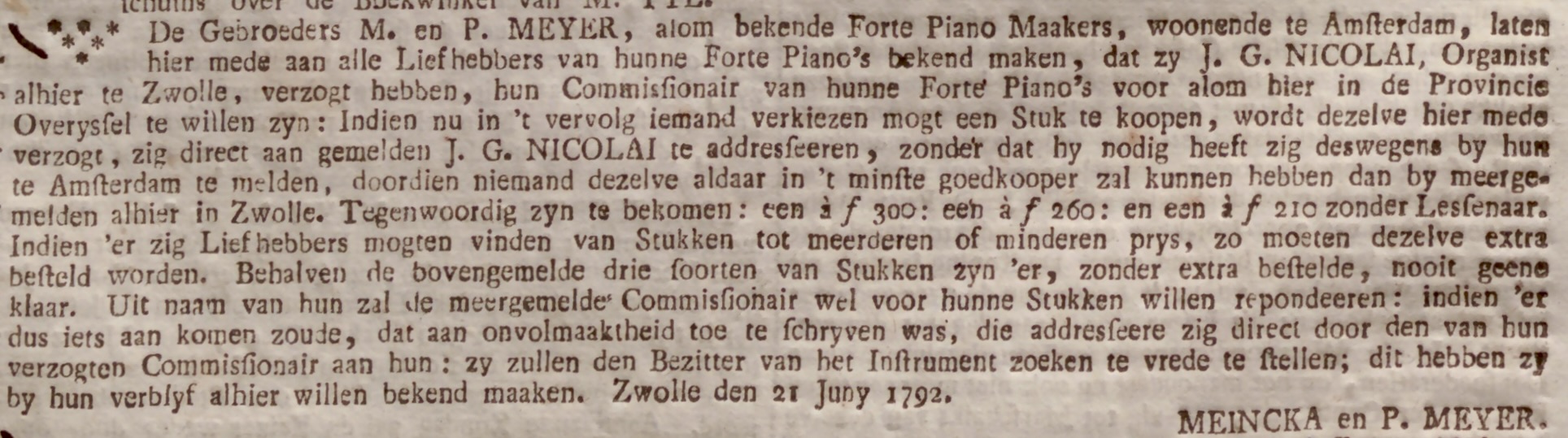
Zwolle den 21 Juny 1792. The Brothers M. and P. MEYER, well-known Forte Piano makers, living in Amsterdam, hereby announce to all lovers of their Forte Pianos, that they have asked J.G. NICOLAI, Organist here in Zwolle, have asked to be their commissioner of their Forte Pianos for all here in the province of Overyssel: If in the future anyone chooses to buy a piece, he/she is hereby requested to address himself/herself directly to J. G. NICOLAI. , without him having to report to them in Amsterdam, because nobody will be able to get them cheaper there than by the aforementioned in Zwolle. Currently available: one at f 300: one at f 260: and one at f 210 without music stand. If there are any lovers of pieces at higher or lower prices, they should be ordered extra. Apart from the above-mentioned three types of pieces, none will ever be ready without an extra order. On their behalf the above-mentioned Commissionair will repay for their pieces: so if anything should come to them, which could be attributed to imperfection, they will address them directly through their commissioner: they will try to reassure the possessor of the instrument, which they will make known here by their promise. Zwolle on 21 June 1792.
MEINCKA en P. MEYER.
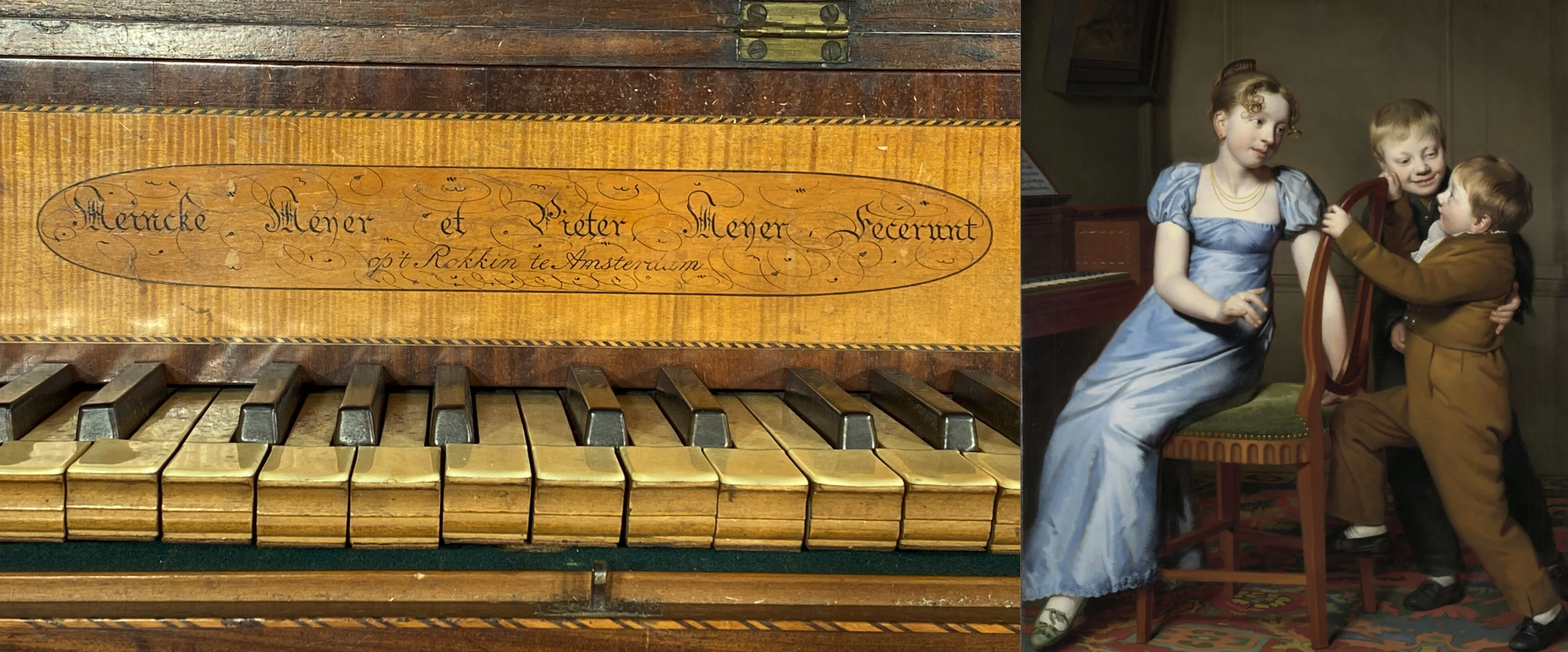
Dutch painting from 1813 by Willem Bartel van der Kooi (1768–1836), featuring a characteristic table piano by Meincke Meijer & Pieter Meijer (visible in the nameplate and inlaid veneer).
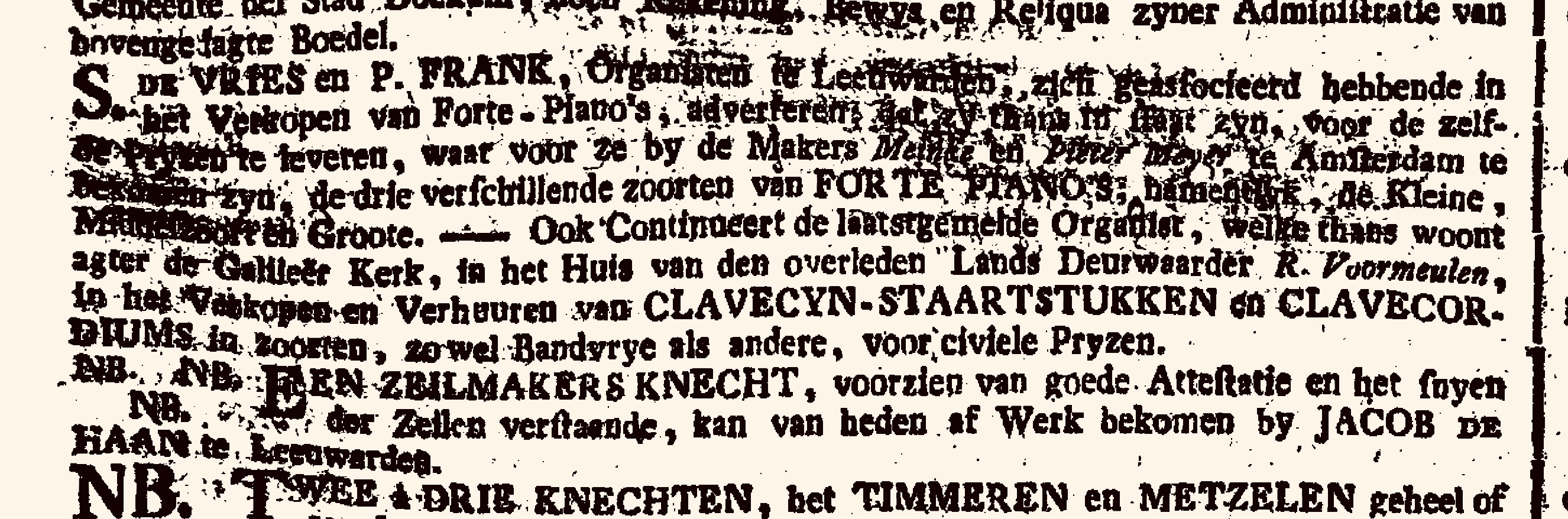
S. De VRIES en P. FRANK, Organisten te Leeuwarden, zich geassocieerd hebbenden in het Verkopen van Forte-Pianos, adverteren; dat zy thans ln staat zyn, voor de zelfde Pryzen te leveren, waar voor ze by de Makers Menke en Pieter Meyer te Amsterdam te bekomen zyn, de drie verschillende zoorten van FORTE PIANO'S; namentlyk, de Kleine, Middelzoort en Groote. Ook Continueert de laatstgemelde Organist, welke thans woont agter de Galileër Kerk, In het Huis van den overleden Lands Deurwaarder R. Voormeulen in het Verkopen en Verhuuren van CLAVECYN-STAARTSTUKKEN en CLAVECORDIUMS in zoorten, zowel Bandvrye als andere, voor civiele Pryzen.
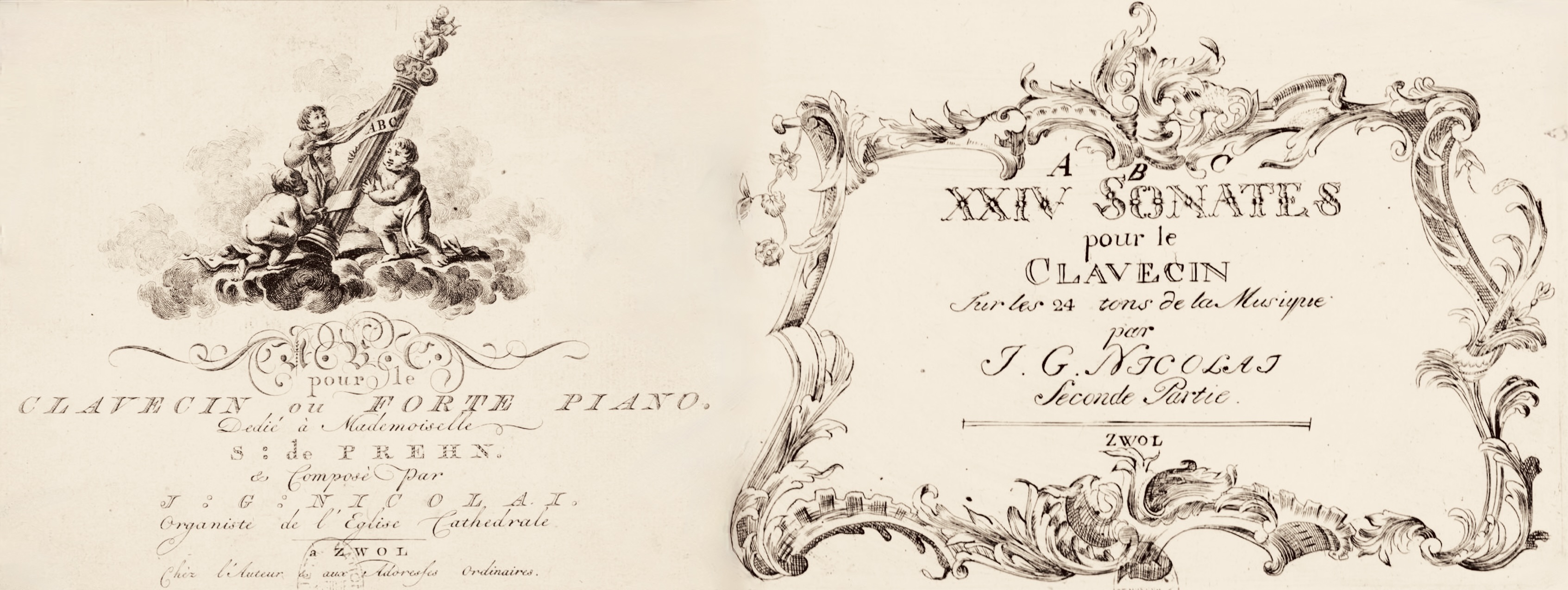
In 1792, Johann Gottlieb Nicolai was appointed as an agent for the Amsterdam-based piano makers Meincke and Pieter Meijer. The organist and composer Johann Gottlieb Nicolai was born in 1744 in Münster, Germany, but spent the greater part of his life in Zwolle.
From 1775 until his death in 1801, he served as the city organist at the Grote of Michaëlskerk (Great or St. Michael’s Church) in Zwolle. A dual publication—comprising his *A.B.C. pour le clavecin ou forte piano* (a method book) and his *24 Sonates pour le clavecin sur les 24 tons de la musique* (a collection of 24 sonatas and 22 preludes spanning 24 musical keys)—was likely released in 1790.