🇬🇧
Amst. Crt., den 10 Juny 1779.
MEINCKE MEYER, geweezene Compagnon van JOHANNES ZUMPI, beroemde Muziek-Instrumentenmaker tot Londen, neemt de vrijheid, lieden van Distinctie en verdere Kenners der Muziek te berigten, dat hy zig te Amsterdam gestabileerd heeft, in Compagnieschap met zyn Broeder PIETER MEYER, tot voortzetten van dezelfde Affaires, in ‘t maaken van allerhande soorten van FORTEPIANO INSTRUMENTEN, door hem veel verbeterd, en verre overtreffende alle andere tot nog toe bekend; zy verzoeken ieders Gunst en Recommandatie. Hunne Woonplaats is op de Kolk, op den hoek van de Voorburgwal, by de Brug, te Amsterdam.

Amsterdam, 10 June 1779.
MEINCKE MEYER, former partner of JOHANNES ZUMPI, famous maker of musical instruments in London, takes the liberty to inform people of distinction and other connoisseurs of music, that he has established himself in Amsterdam, in partnership with his brother PIETER MEYER, to continue the same business, in making all kinds of FORTEPIANO INSTRUMENTS, much improved by him, and far exceeding all others known so far; they request everyone's favour and recommendation. Their place of residence is on the Kolk, on the corner of Voorburgwal, by the Brug, in Amsterdam.
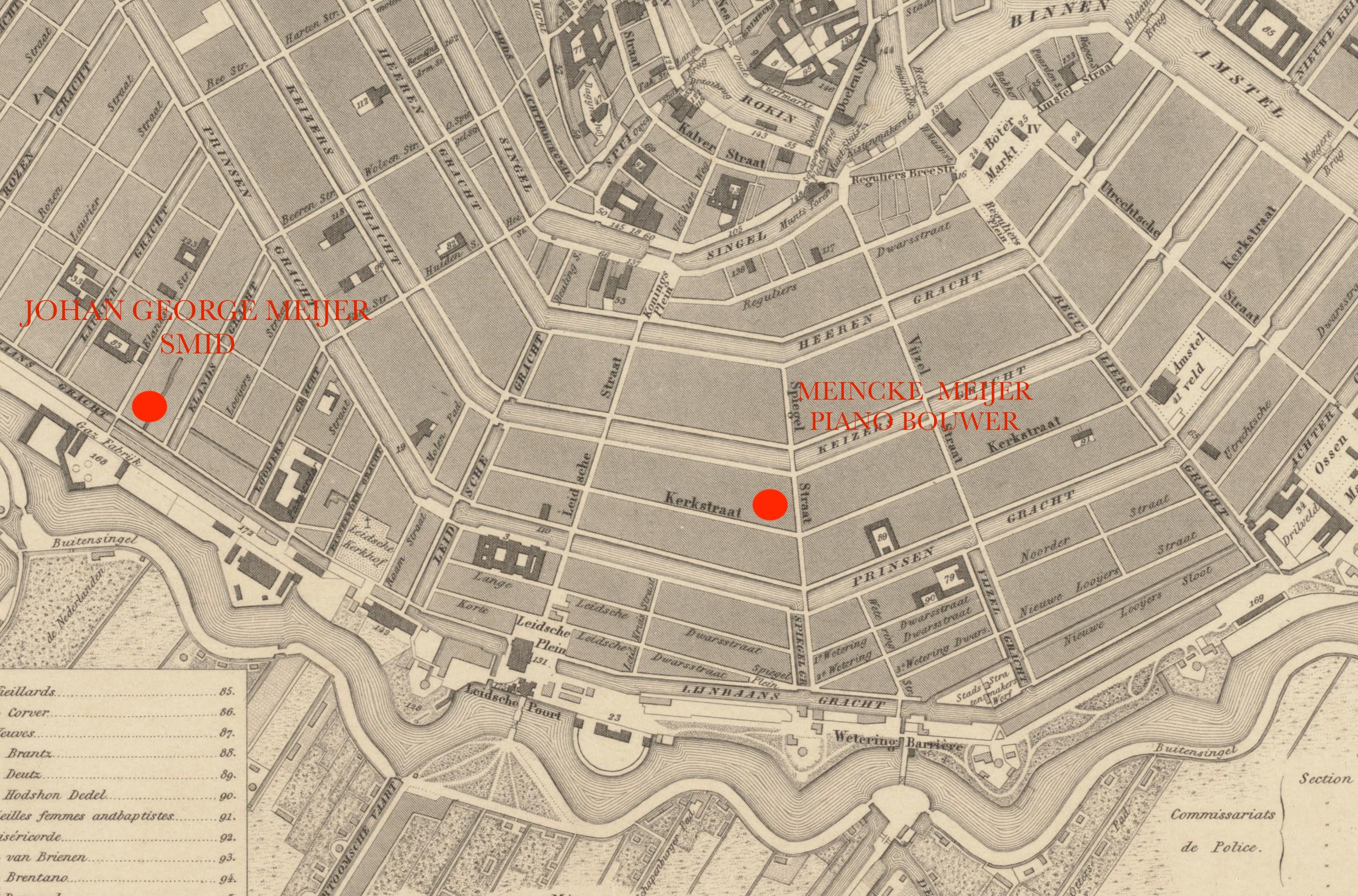
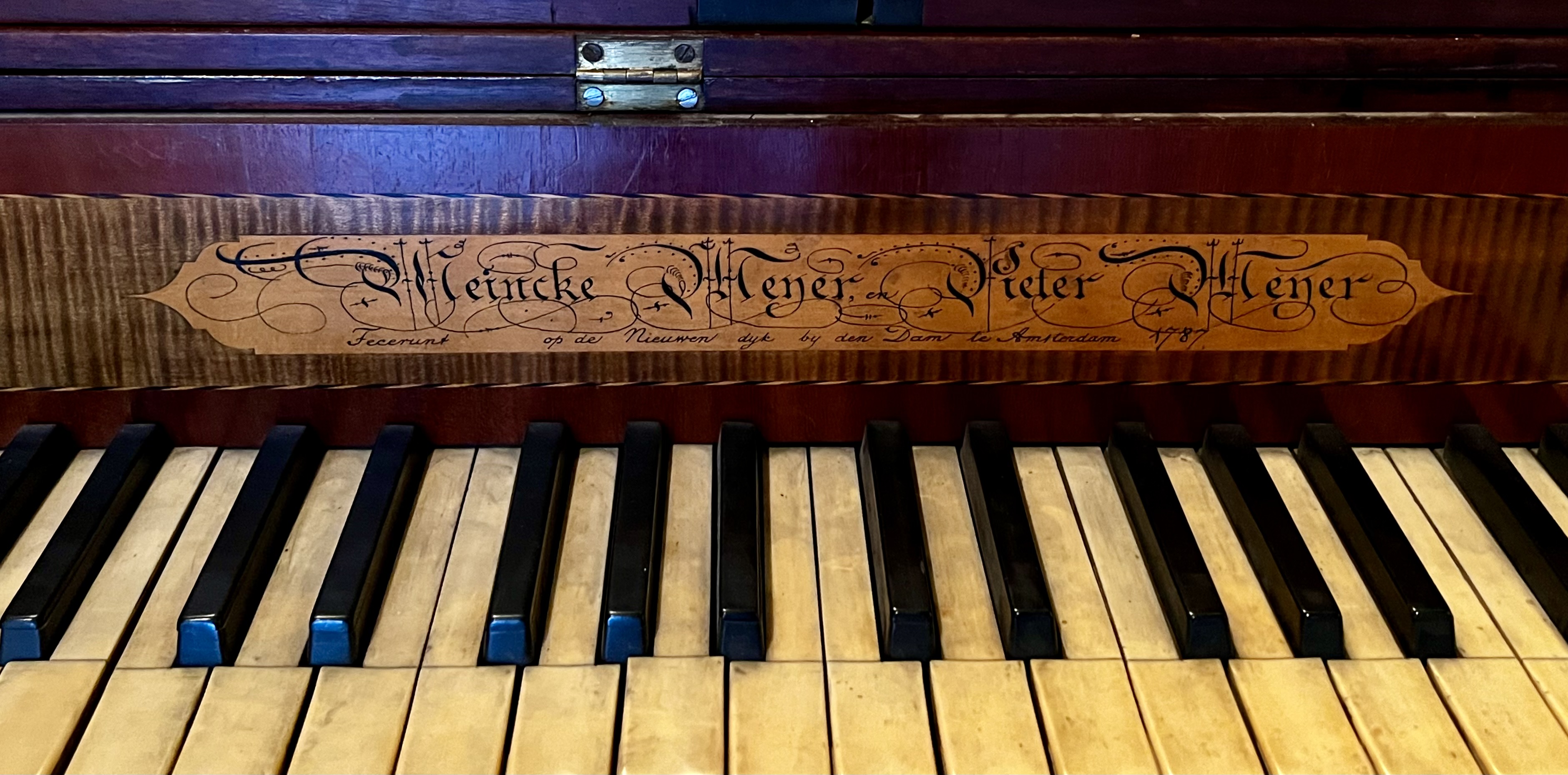
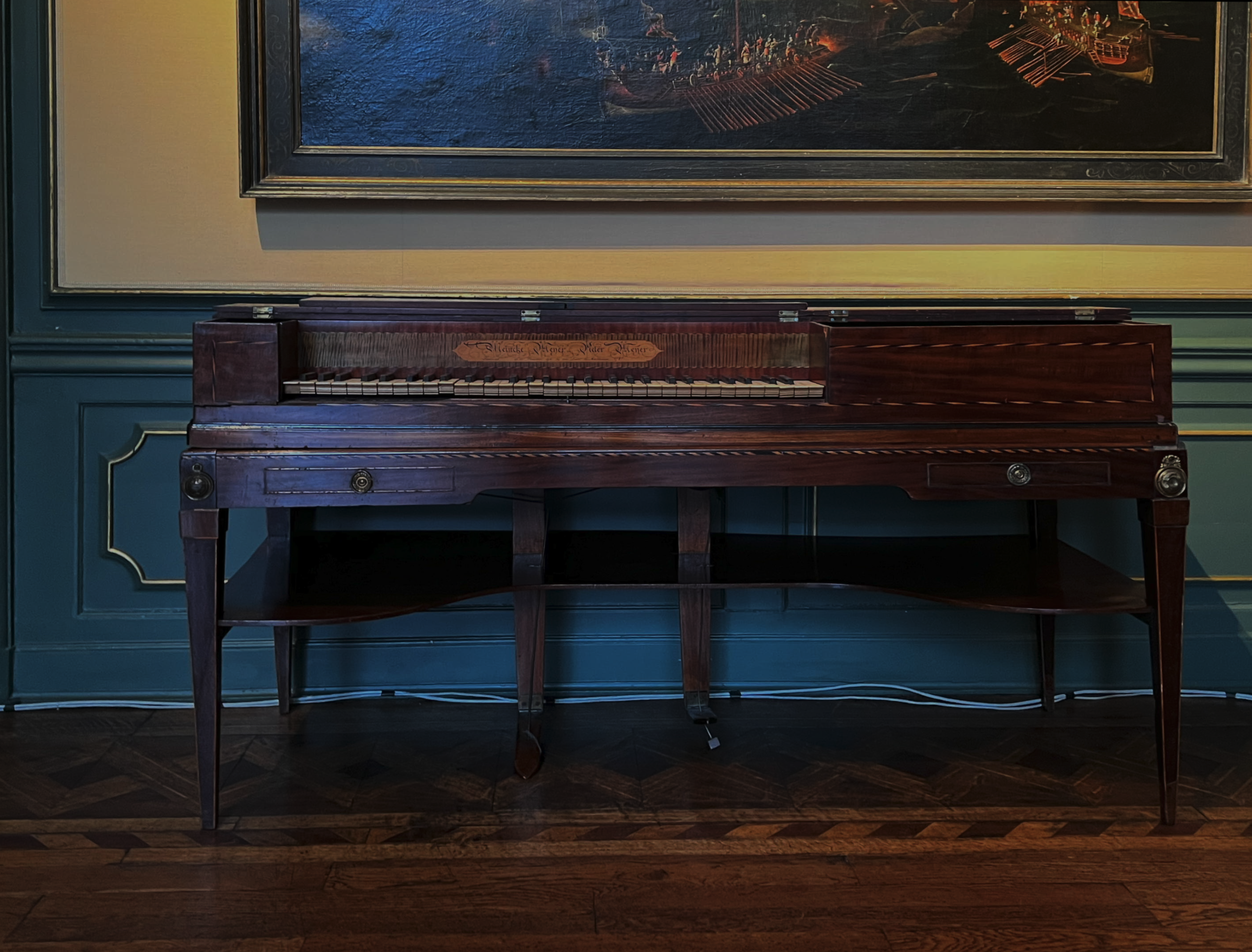
The brothers Meincke and Pieter Meyer are early piano builders in Amsterdam whose instruments have survived. Their year of birth and death are not known. Meincke worked in London before 1779 as an associate of the famous Saxon-born Johannes Zumpe. Zumpe had set up his own workshop there in 1761. that turned out to have been a hit. After the better circles in London had accepted the little unknown instrument, demand grew to such an extent that one could speak of an explosive development. Zumpe was able to attract several collaborators, such as Meincke Meijer. Two pianos, from 1776 and 1778, recall their collaboration. No doubt Zumpe will have tried to expand his sales area, especially to the Netherlands. Meincke must have known about the growing demand in Amsterdam, because in 1779 he announced by advertisement that he had established himself in partnership with his brother Pieter.
Among the Meyer piano makers, two distinct generations can be identified. The other generation was born around 1735–1745. This group includes: I - Meincke Meyer II - Pieter Meyer III - Joachim Andreas Meyer ( Father of Hilmer Meyer and Andreas) IV - Hendrik Anthonie Meyer (1745 - † 1812)
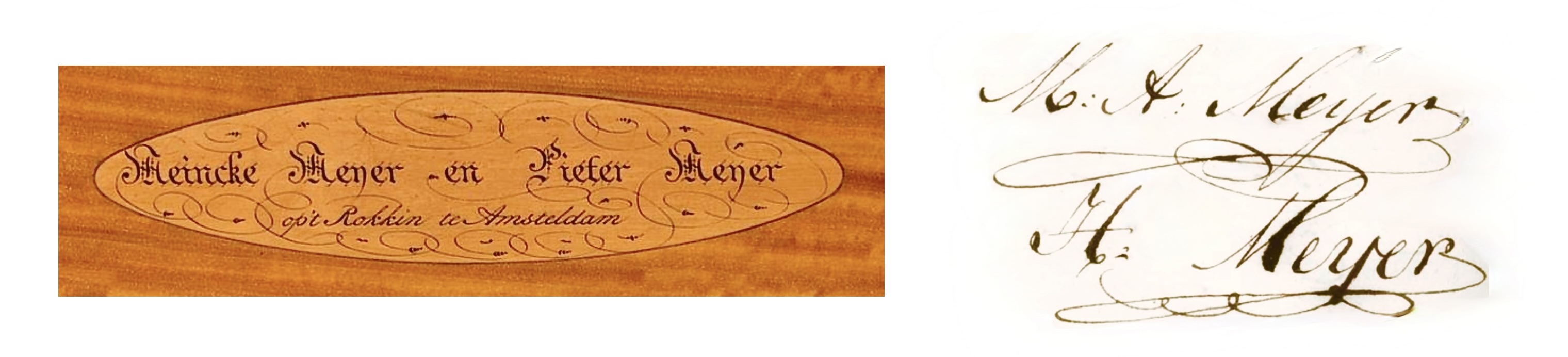
Tot de jongere generatie (geboren na 1767) behoren: V - Meincke Andries Meyer Meinecke (Michael) Andries (Andreas) Meyer Born: London 1767) VI - Jan Lodewijk Meyer Jan (Johan) Lodewijk Meyer (Born: London 1772) John Ludowyk Meyer - John Ludwich Meyer - John Ludwig Meyer - John Ludwich Meyer VII - Hilmer Meyer Hilmar Meyer - Born Hittfeld: Januar 1773 – died: Amsterdam 20. August 1816)
VIII - Andreas Meyer born 15 October 1775 in Hittfeld near Hamburg. Brother of Hilmer Meyer
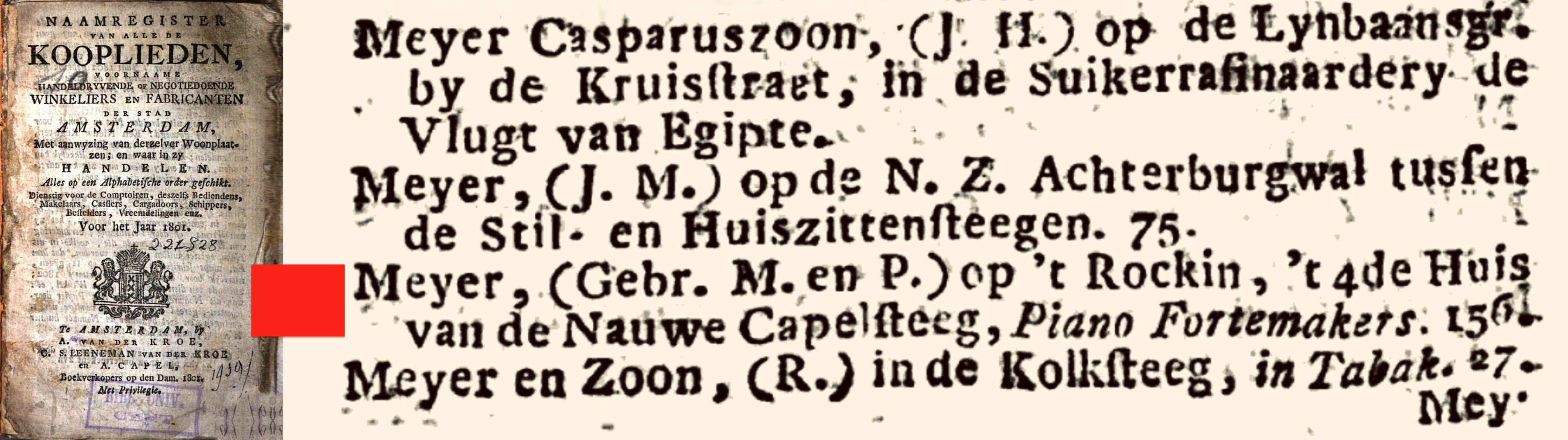
Meyer, (Gebr.M.en P.) op ’t Rockin, ’t 4 de Huis van de Nauwe Capelsteeg, Piano Fortemakers.156
NAAMREGISTER VAN ALLE DE
KOOPLIEDEN,
VOORNAAME
HANDELDRYVENDE OF NEGOTIEDOENDE
WINKELIERS EN FABRICANTEN
DER STAD
AMSTERDAM
Met aanwijzing van dezelve Woonplaatzen;
en waar in zy HANDELEN.
Voor het Jaar 1801.
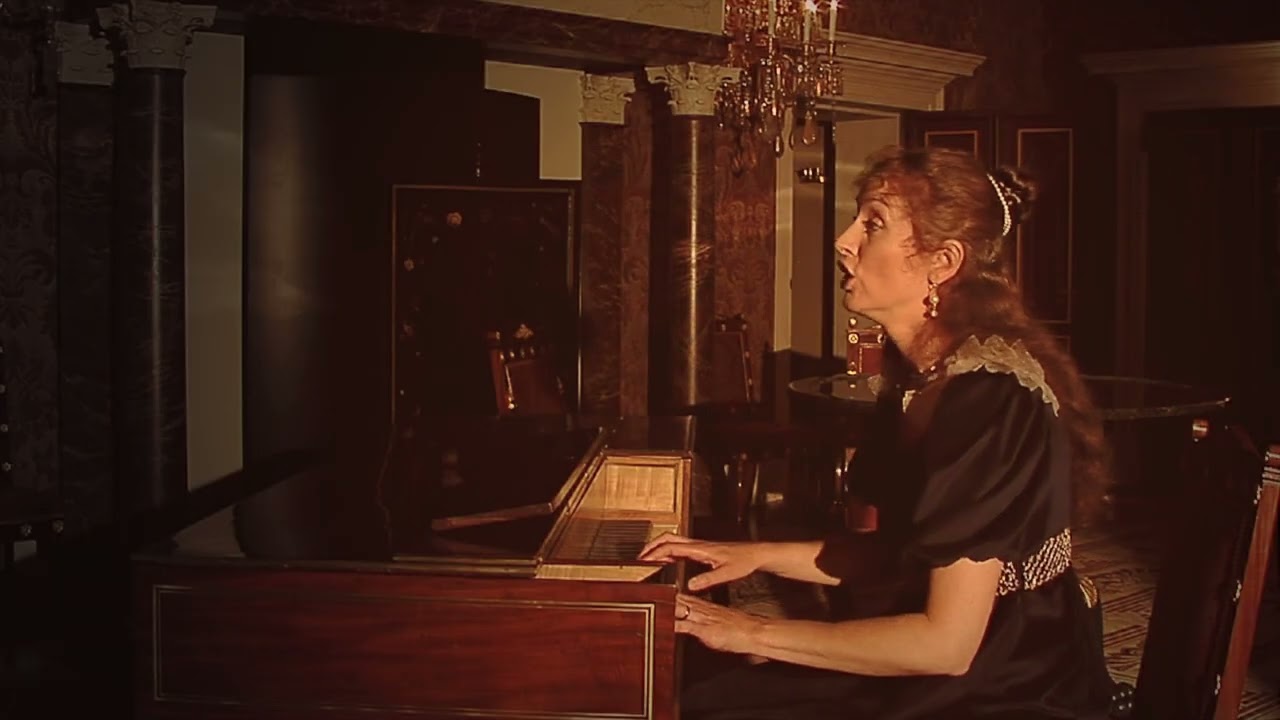
Johann Christian Bach played a Zumpe instrument publicly and may have acted as a sales agent for Zumpe pianos Johann Christian Bach 1735-1782 Sonate G-Dur - Allegro & Tempo di Menuetto
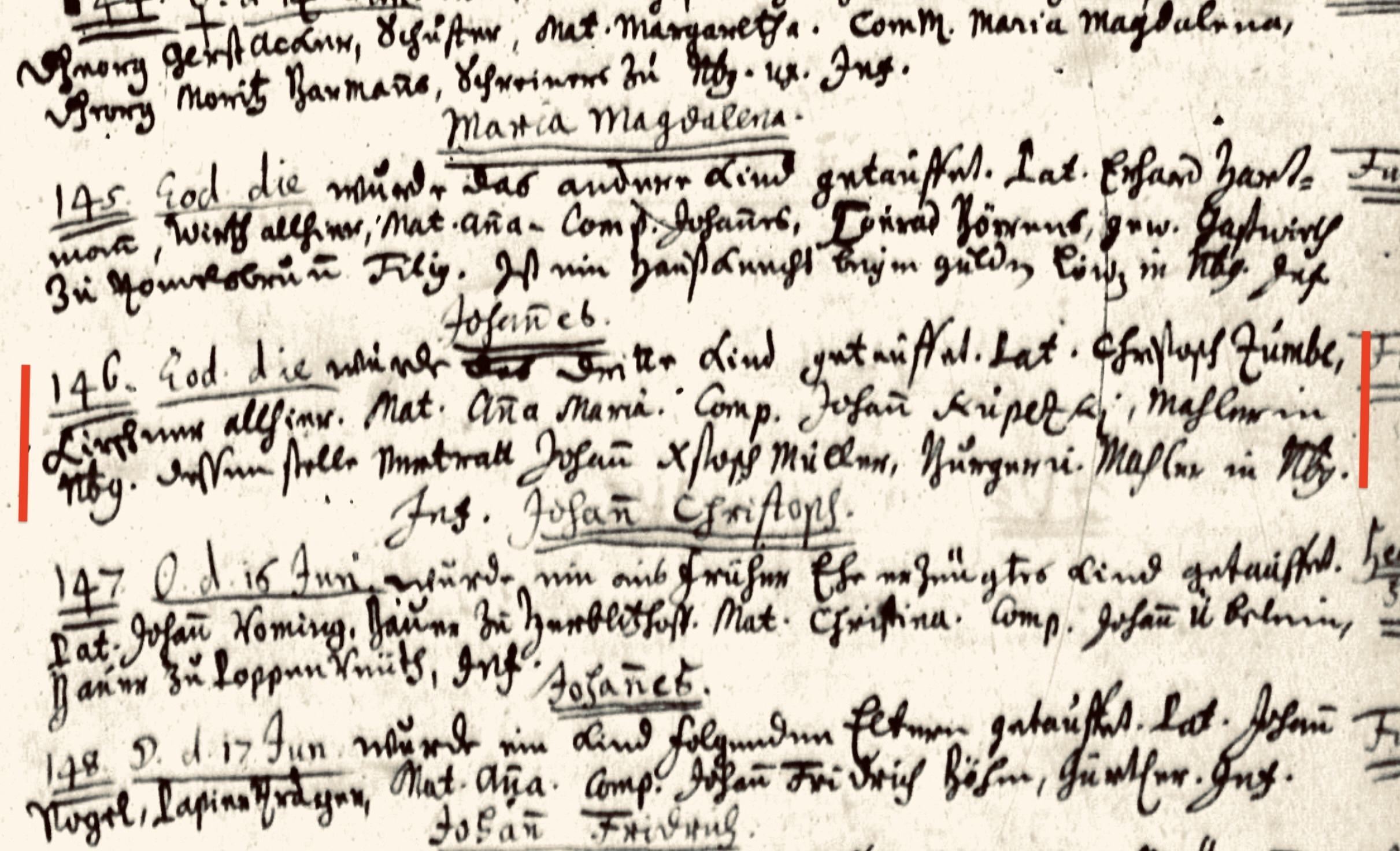
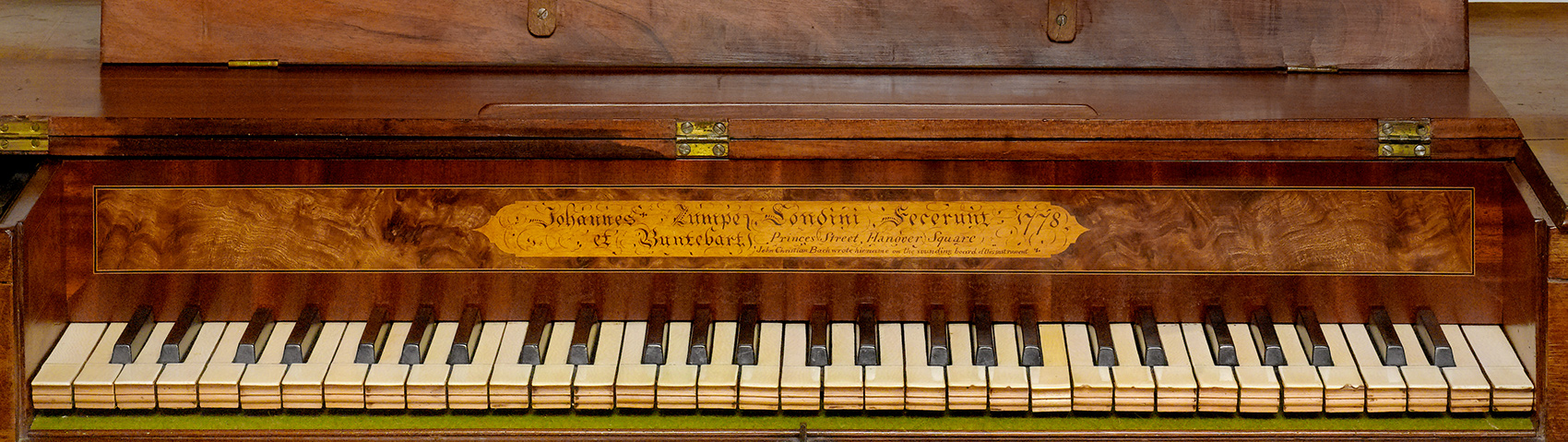

Zumpe received his training under Gottfried Silbermann. He was one of the German keyboard instrument makers who fled to London during the Seven Years' War (1756–1763). He worked briefly for Burkat Shudi before opening his own shop, "at the sign of the Golden Guittar," on Princes Street, Hanover Square, in 1761. On December 3, 1760, Zumpe married Elizabeth Beeston. His 1784 will lists his address as Queen Charlotte Row, in the parish of St. Mary-le-Bow. From 1769 until September 24, 1778, Zumpe was in partnership with Gabriel Buntebart. In 1778, Meincke Meyer joined Zumpe. A year later, on June 10, 1779, he placed an advertisement for his instruments in the *Amsterdamse Courant*, listing his residence as "de Kolk" in Amsterdam.
Meincke & Pieter Meyer, "Pianoforte Makers to Their Majesties"
Royal Palace Amsterdam - Meincke & Pieter Meyer
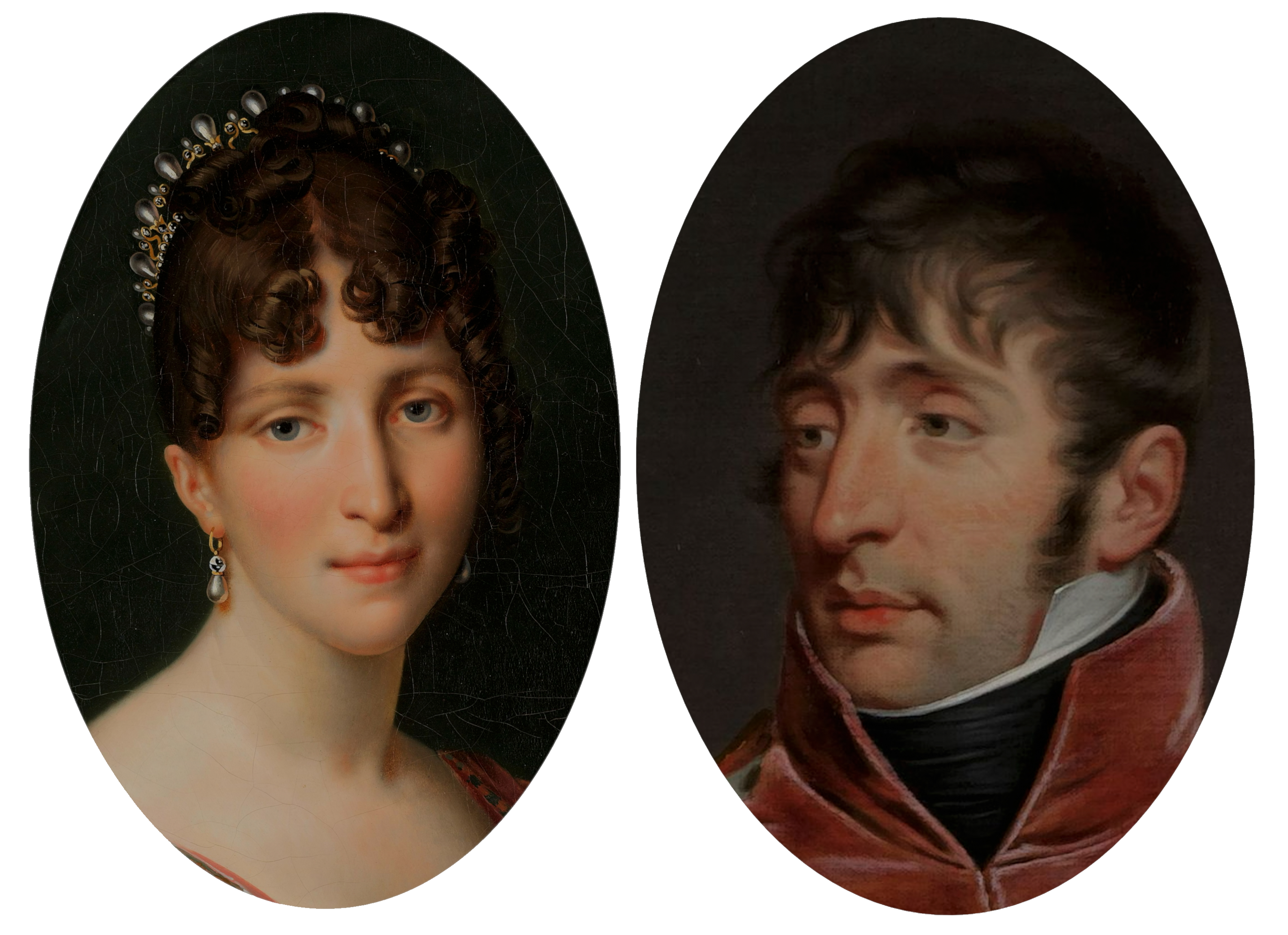
"Pianoforte Makers to Their Majesties"—that is, to Louis Bonaparte and Hortense de Beauharnais, the first King and Queen of Holland. In March 1809, the ledger of the Treasurer-General in the King’s service records a payment to the Meyer brothers for the supply of three fortepianos: two for the palace in Amsterdam (totaling 2,200) and one for the ‘Château de Soestdijk’ (totaling 450).
Royal Collections, The Hague, fragmentary archives of the Civil Household of King Louis Napoleon, inventory number G004-C-14.

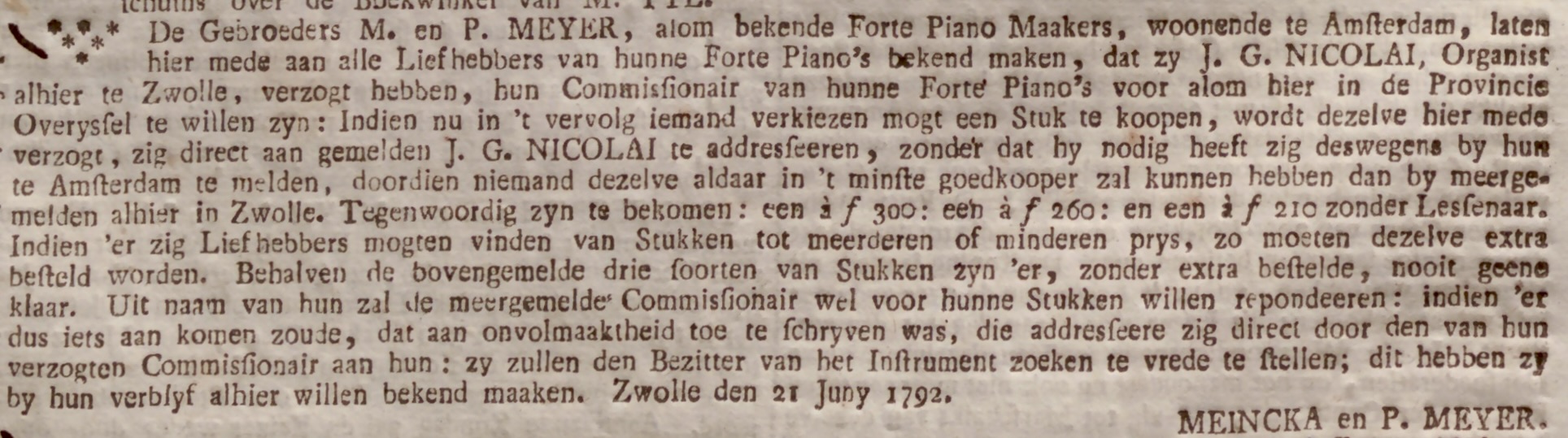
Zwolle den 21 Juny 1792. The Brothers M. and P. MEYER, well-known Forte Piano makers, living in Amsterdam, hereby announce to all lovers of their Forte Pianos, that they have asked J.G. NICOLAI, Organist here in Zwolle, have asked to be their commissioner of their Forte Pianos for all here in the province of Overyssel: If in the future anyone chooses to buy a piece, he/she is hereby requested to address himself/herself directly to J. G. NICOLAI. , without him having to report to them in Amsterdam, because nobody will be able to get them cheaper there than by the aforementioned in Zwolle. Currently available: one at f 300: one at f 260: and one at f 210 without music stand. If there are any lovers of pieces at higher or lower prices, they should be ordered extra. Apart from the above-mentioned three types of pieces, none will ever be ready without an extra order. On their behalf the above-mentioned Commissionair will repay for their pieces: so if anything should come to them, which could be attributed to imperfection, they will address them directly through their commissioner: they will try to reassure the possessor of the instrument, which they will make known here by their promise. Zwolle on 21 June 1792.
MEINCKA en P. MEYER.
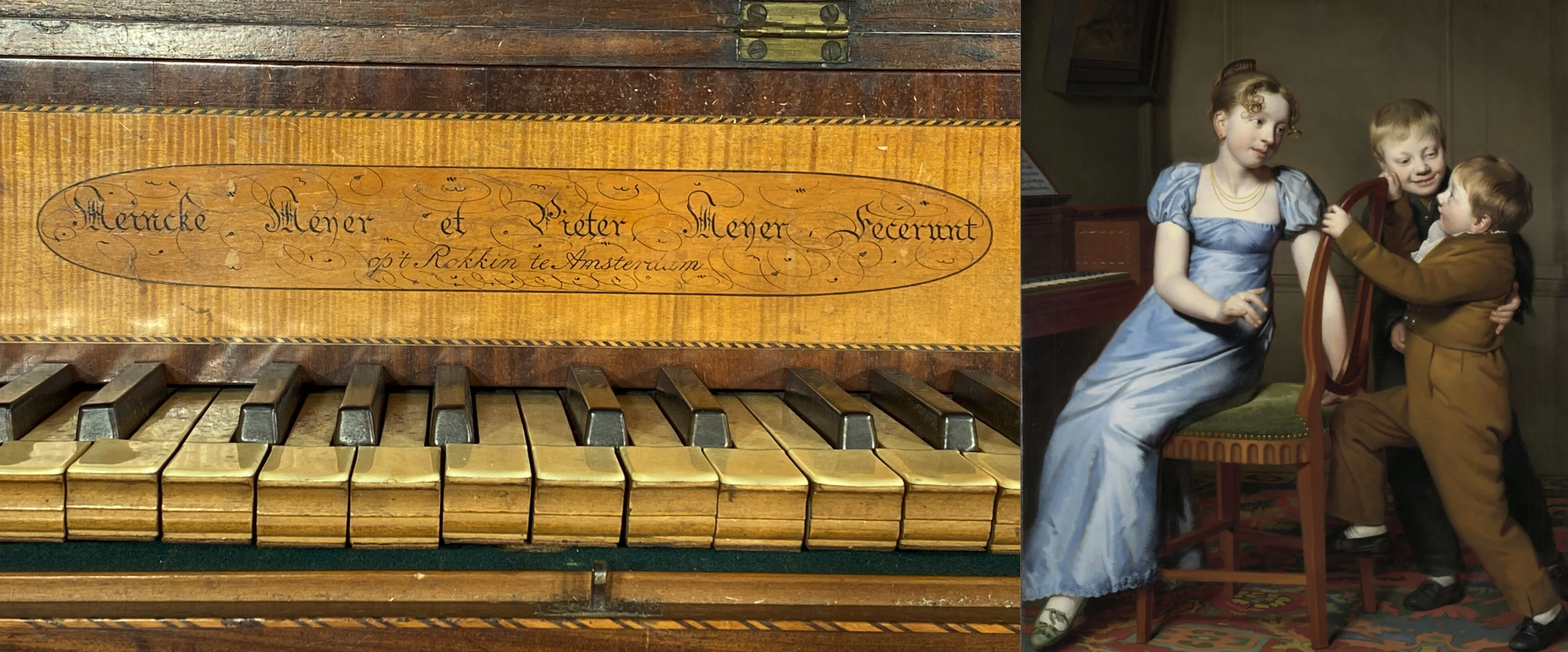
Dutch painting from 1813 by Willem Bartel van der Kooi (1768–1836), featuring a characteristic table piano by Meincke Meijer & Pieter Meijer (visible in the nameplate and inlaid veneer).
In 1792, Johann Gottlieb Nicolai was appointed as an agent for the Amsterdam-based piano makers Meincke and Pieter Meijer. The organist and composer Johann Gottlieb Nicolai was born in 1744 in Münster, Germany, but spent the greater part of his life in Zwolle.
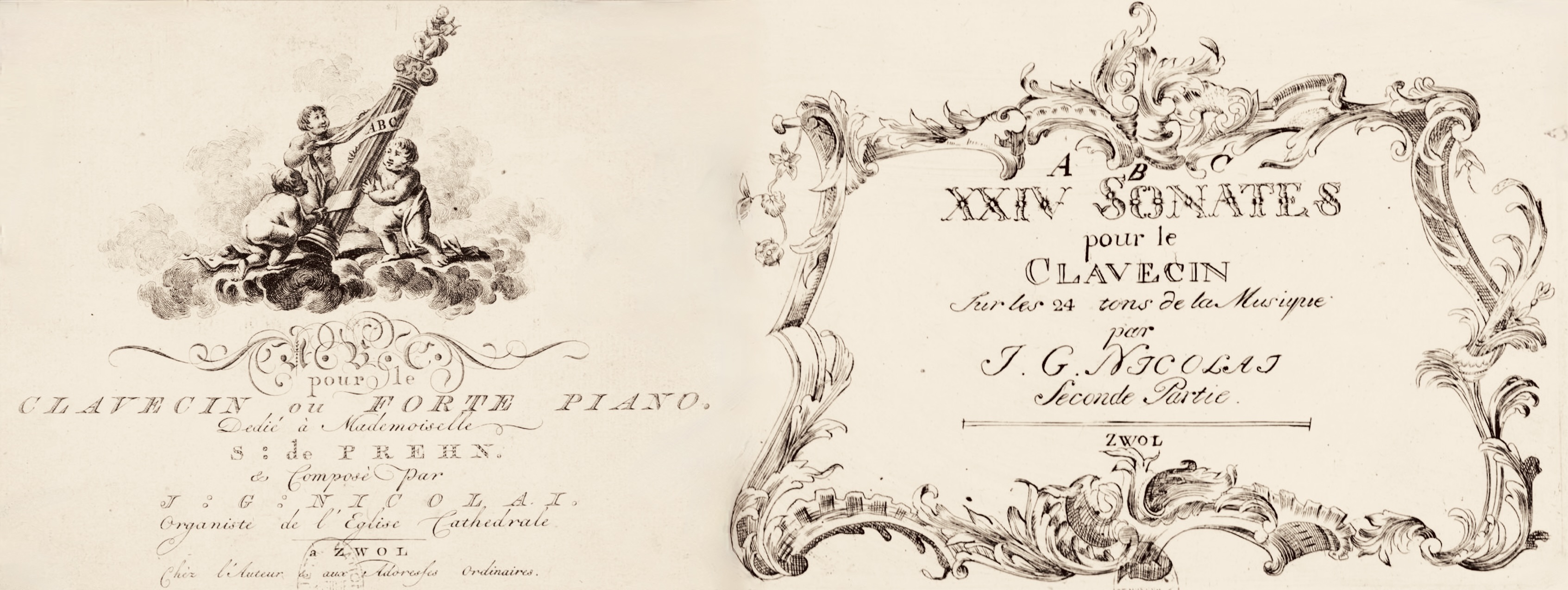
From 1775 until his death in 1801, he served as the city organist at the Grote of Michaëlskerk (Great or St. Michael’s Church) in Zwolle. A dual publication—comprising his *A.B.C. pour le clavecin ou forte piano* (a method book) and his *24 Sonates pour le clavecin sur les 24 tons de la musique* (a collection of 24 sonatas and 22 preludes spanning 24 musical keys)—was likely released in 1790.
In the *Musick’s Monument Dulcken* project, two questions remain unanswered:
Did Jan Dulcken (born 1768)—who received training in fortepiano construction from his father in Paris—go on to work for the firm of Meincke and Pieter Meyer? Jan Dulcken’s daughter, Alida, married Johan George Meyer. Johan George’s father was Johan Casper Hendrik Meyer , born in Eißendorf, near Hamburg. Was Johan George Meyer a blacksmith—perhaps producing the metal components for the pianos?
Dülken hatte die Pianofortebaukunst in Hamburg und Paris erlernt, und diese Kunst nach München verpflanzt.
Pieter Meyer Hamburg?????
Dülken had learned the craft of pianoforte making in Hamburg and Paris, and transplanted this art to Munich.
Pieter Meyer Hamburg?????
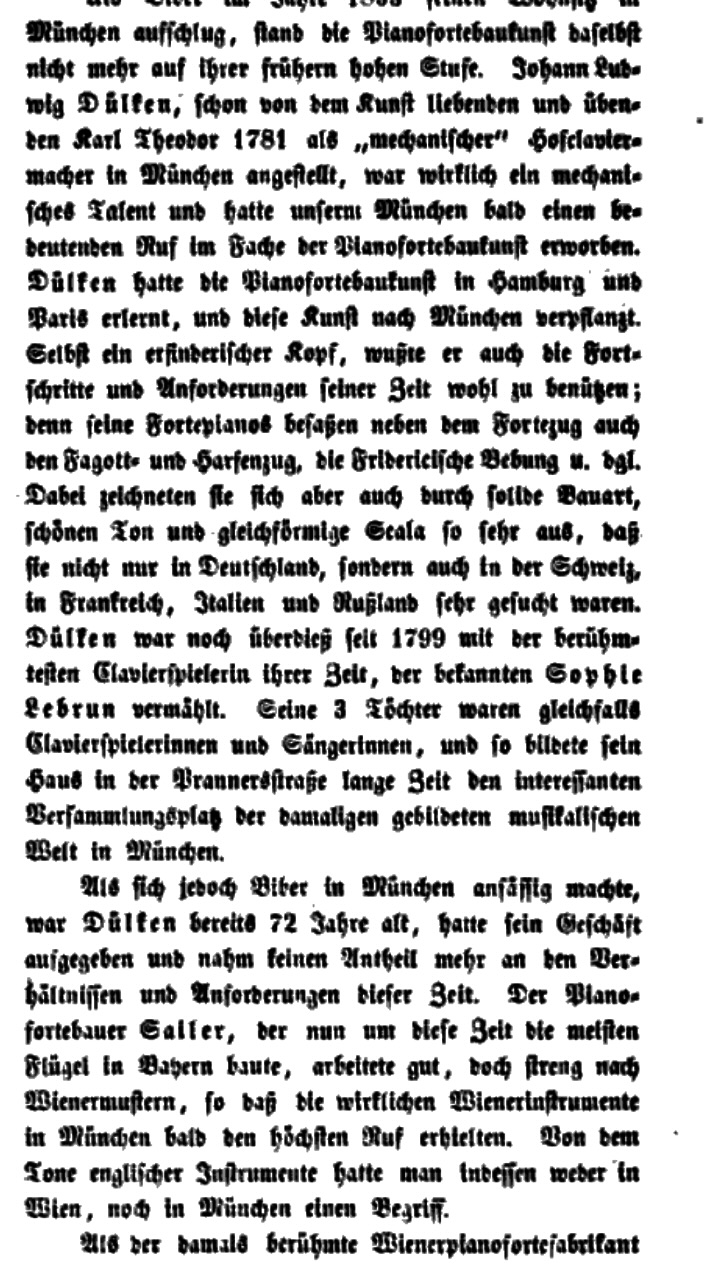
Die Stadt im Jahre 1808 München aufschlug, stand die Pianofortebankunst dasselbe nicht mehr auf ihrer frühern hohen Stufe. Johann Ludwig Dülken, schon von dem Kunst liebenden und übenden Karl Theodor 1781 als ,,Mechanisker“ Hofclaviermacher in München angestellt, war wirklich ein mechanisches Talent und hatte unsern München bald einen bedeutenden Ruf im Fache der Pianofortebankunst erworben. Dülken hatte die Pianofortebaukunst in Hamburg und Paris erlernt, und diese Kunst nach München verpflanzt. Selbst ein erfaberischer Kopf, wußte er auch die Fortschritte und Anforderungen seiner Zeit wohl zu benüzen; denn seine Fortepianos besaßen neben dem Fortezug auch den Fagott- und Harfenzug, die Friderichsche Hebung u. dgl. Dabei zeichneten sie sich aber auch durch solide Bauart, schönen Ton und gleichförmige Scala so sehr aus, daß sie nicht nur in Deutschland, sondern auch in der Schmey, in Frankreich, Italien und England sehr geschäßt waren. Dülken war noch überdieß seit 1799 mit der berühmtesten Clavierspielerin ihrer Zeit, der bekannten Sophie Lebrun vermählt. Seine 3 Töchter waren gleichfalls Clavierspielerinnen und Sängerinnen, und so bildete sein Haus in der Prannerstraße lange Zeit den interessanten Versammlungsplatz der damaligen gebildeten musikalischen Welt in München.
Als sich jedoch Ritter in München ansässig machte, war Dülken bereits 72 Jahre alt, hatte sein Geschäft aufgegeben und nahm keinen Antheil mehr an den Verhältnissen und Anforderungen dieser Zeit. Der Pianofortebauer Saller, der nun um diese Zeit die meisten Flügel in Bayern baute, arbeitete gut, doch streng nach Wienermustern, so daß die wirklichen Wienerinstrumente in München bald den höchsten Ruf erhielten. Von dem Tore englischer Instrumente hatte man indessen woher in Wien, noch in München einen Beztüft.
The city in 1808 [Note: contextually refers to arriving in Munich] Munich, the art of pianoforte making no longer stood at its former high level. Johann Ludwig Dülken, appointed as a "mechanician" court keyboard maker in Munich in 1781 by the art-loving and practicing Karl Theodor, was truly a mechanical talent and had soon acquired for our Munich a significant reputation in the field of pianoforte making. Dülken had learned the art of pianoforte making in Hamburg and Paris, and transplanted this art to Munich. Himself an inventive mind, he also knew how to make good use of the progress and demands of his time; for his Fortepianos possessed, besides the forte stop, also the bassoon and harp stop, the Friderich lift, and the like. At the same time, they distinguished themselves by such solid construction, beautiful tone, and uniform scale that they were highly valued not only in Germany, but also in Switzerland [printed as Schmey], in France, Italy, and England. Moreover, Dülken had been married since 1799 to the most famous keyboard player of her time, the well-known Sophie Lebrun. His 3 daughters were likewise keyboard players and singers, and thus his house in Prannerstraße long formed the interesting meeting place of the educated musical world of the time in Munich.
When, however, Ritter settled in Munich, Dülken was already 72 years old, had given up his business, and no longer took part in the conditions and demands of this time. The pianofortemaker Saller, who at that time built most of the grand pianos in Bavaria, worked well, but strictly according to Viennese models, so that the actual Viennese instruments in Munich soon received the highest reputation.