Foundation Musick's Monument
The Emperor in the Low Countries: How Jean-Herman Faber Immortalized the Most Powerful Man in Europe
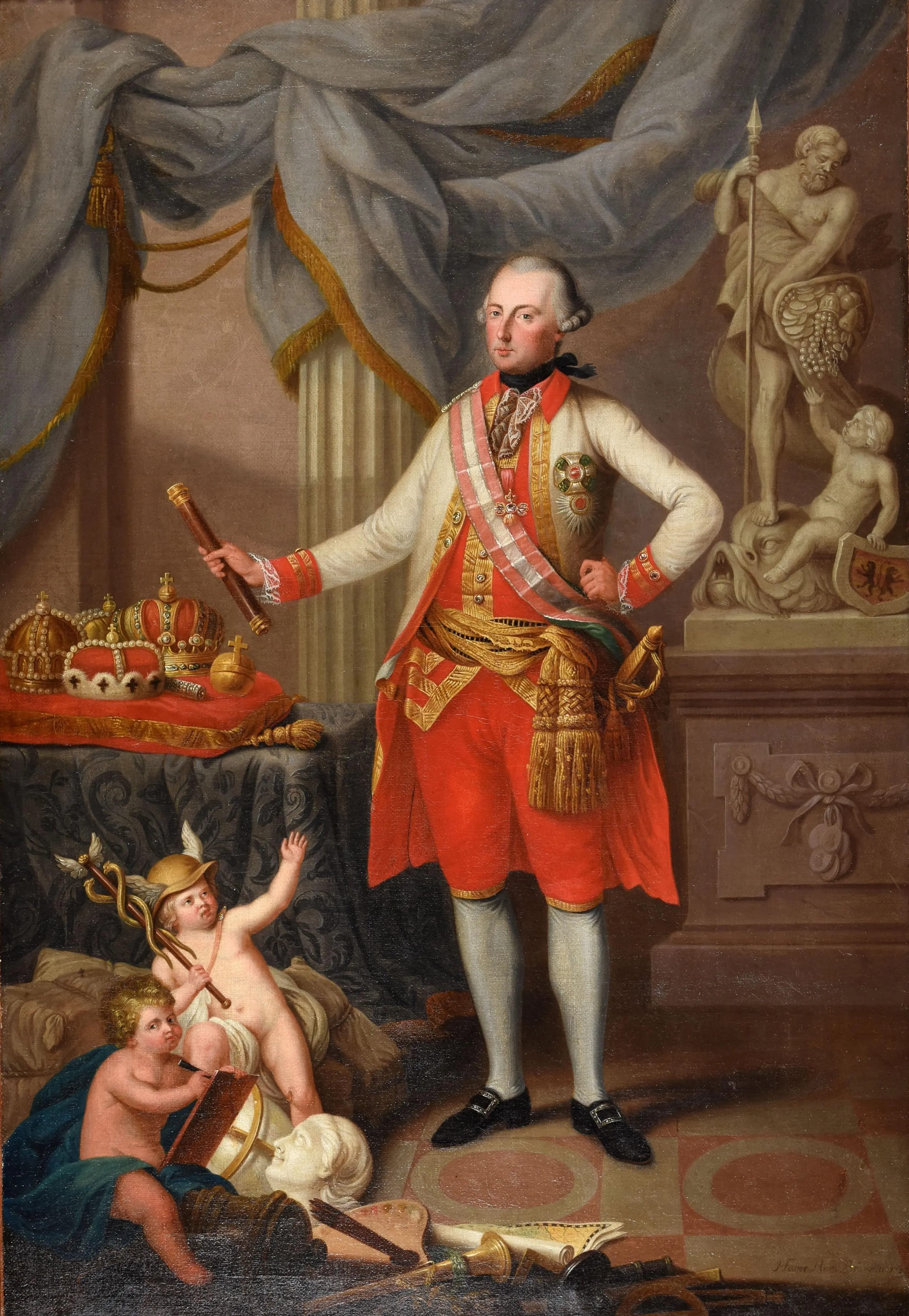
In the spring of 2021, the Belgian art world was deeply stirred when a monumental, virtually forgotten painting surfaced at the Arenberg auction house in Brussels. Signed by the Brussels master Jean-Herman Faber (1734–1800), the massive canvas depicted Emperor Joseph II of Austria in grand, lifelike detail. To immense acclaim, it was hammered down for over $37,000. This was no ordinary portrait; it was a rediscovered piece of political history, serving as a powerful reminder of the era when the distant emperor in Vienna also held sway over the Austrian Netherlands.
Behind this impressive canvas lies a fascinating story of imperial propaganda, regional pride, and the subtle nuances of eighteenth-century diplomacy.
A Viennese Focus in Brussels
Gazing upon the painting, Joseph II stands as the ultimate embodiment of absolute authority. Cloaked in a magnificent ermine-lined mantle, the emperor looks down at the viewer with a self-assured, almost stern expression. The prestigious military Order of Maria Theresa shines on his chest, while the heavy crowns of the Habsburg Empire rest nearby on a plush crimson cushion.
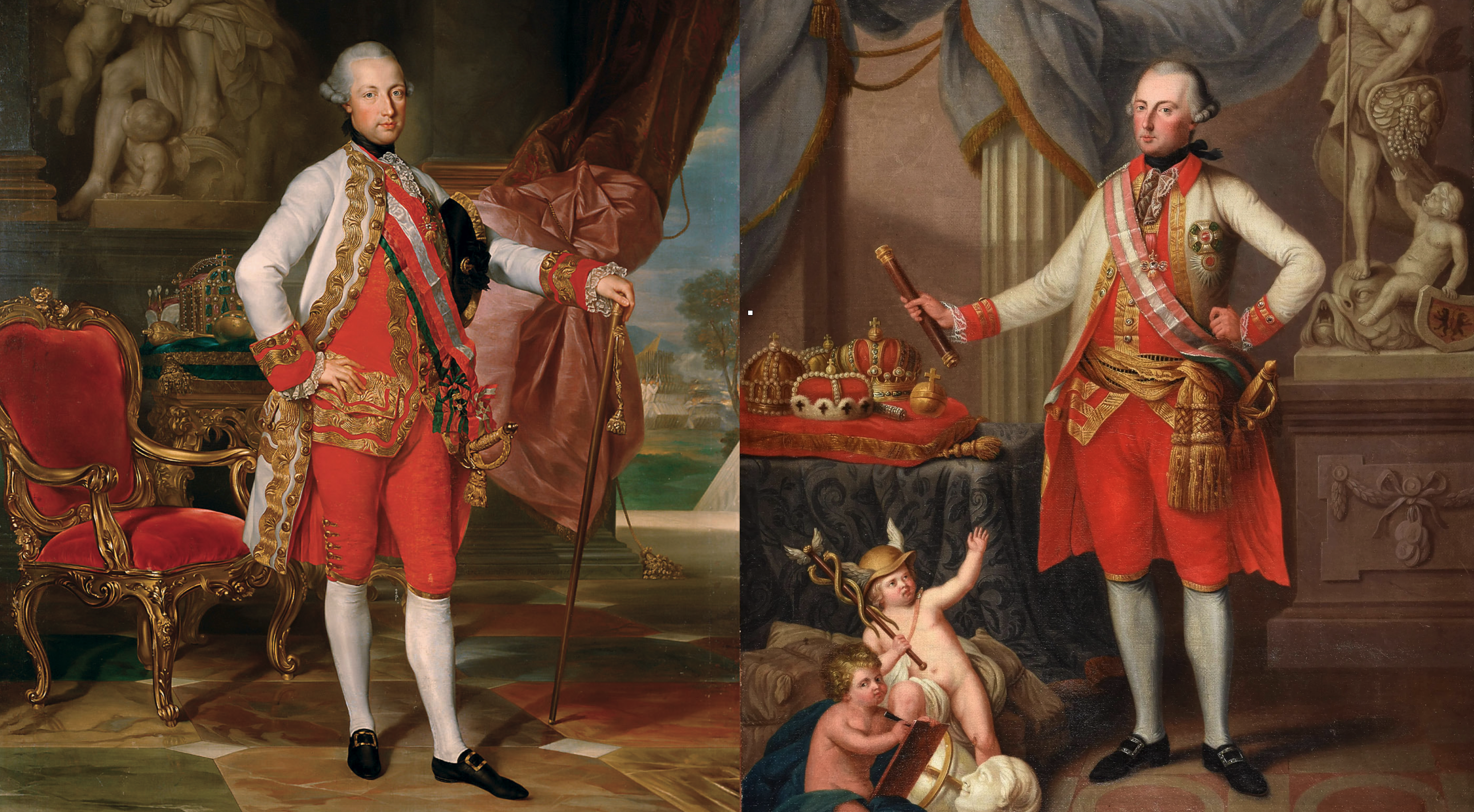
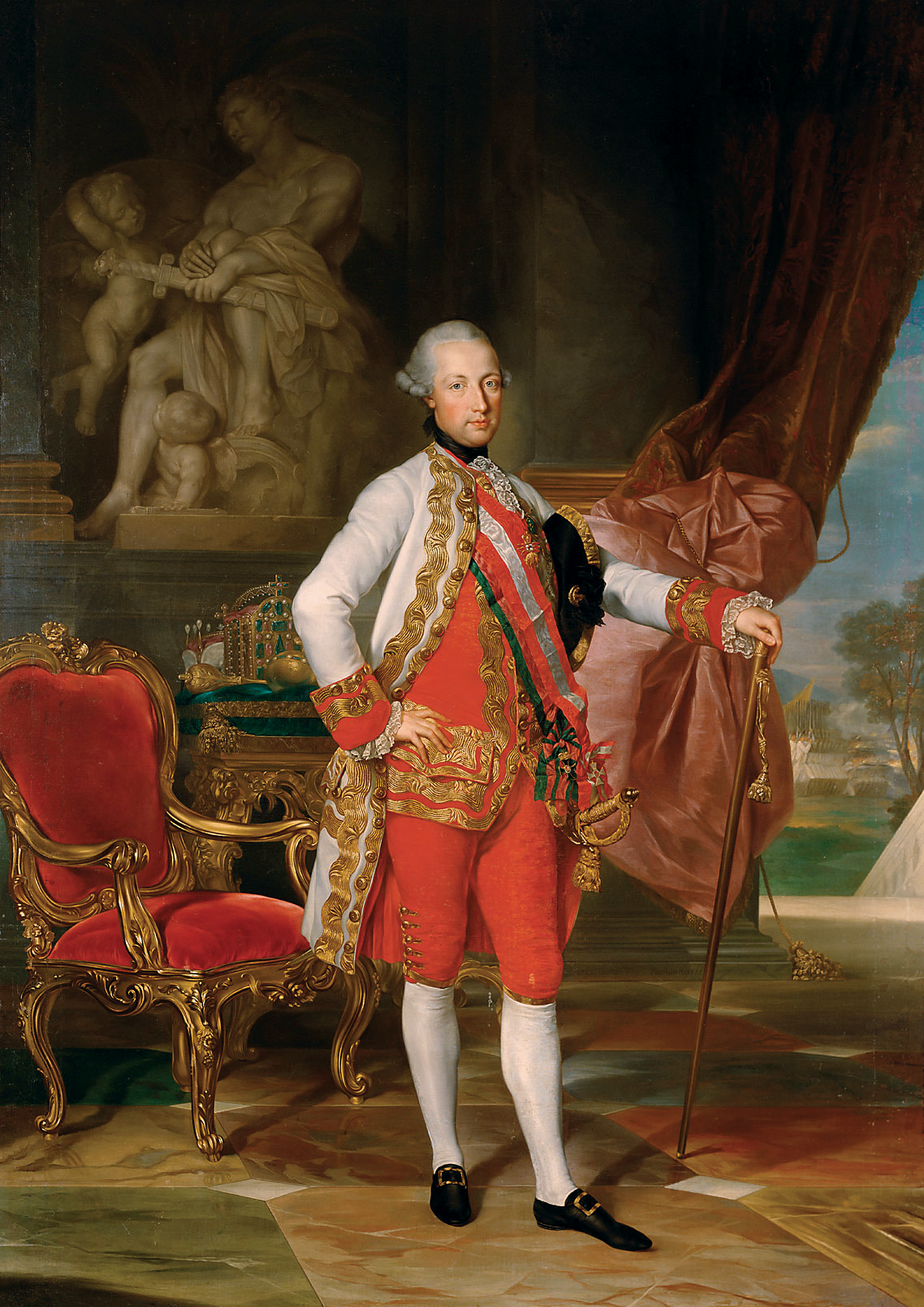
Although the canvas vividly captures the atmosphere of the imperial court in Vienna, Faber did not receive this commission directly from the throne. Joseph II consistently chose his favorite Viennese court painter, Anton von Maron, to craft his official state portraits. However, an 18th-century monarch ruled through his likeness. Because Joseph II was also the sovereign of modern-day Belgium, government halls, noble guilds, and universities across Brussels, Antwerp, and Ghent required his portrait. Local authorities turned to top regional artists like the Brussels-based Faber to produce high-quality, monumental versions of the official Viennese model. Faber mirrored the royal pose perfectly but infused it with his own distinctive mastery.
The Enlightened Patron
What truly sets Faber’s interpretation apart is the subtle symbolism woven into the lower foreground. Here, he painted classical putti (cherubs) surrounded by the tools and attributes of painting (Pictura) and commerce (Mercury).
With this inclusion, Faber played skillfully into the political landscape of the time. Joseph II was celebrated as an 'enlightened despot'—a man of reason and science dedicated to modernizing the economy and cultural institutions of his realms. By introducing these allegorical figures, Faber framed the emperor not merely as a formidable military leader, but explicitly as the grand protector of Flemish artists and merchants. It was an exceptionally clever piece of artistic flattery, presenting the ruler exactly as the people of the Low Countries wished to see him.
A Princely Connection
Selecting Jean-Herman Faber for such a task was a natural choice. As one of the most respected genre and portrait painters in Brussels, he was highly favored among the topmost aristocracy. It is certainly no coincidence that his work appeared in major government halls as well as the private collections of the absolute elite. The very same Faber who brought this piece of imperial propaganda to life on canvas was also commissioned by Prince Charles-Joseph de Ligne—one of Emperor Joseph II’s closest confidants—to paint his exotic Russian coachman. Faber was the artistic bridge connecting the grand halls of Viennese power with the cosmopolitan nobility.
A Window into a Turbulent Past
Today, original state portraits of Joseph II are incredibly rare in public Belgian museum collections. Many of these canvases were defaced, hidden away, or destroyed during the turbulent years of the Brabant and French Revolutions that erupted shortly after the emperor’s death.
Jean-Herman Faber’s painting stands as a rare and precious survivor. It commemorates a brief, vibrant chapter when the arts in Brussels flourished under the wing of an Austrian emperor. Every single one of Faber's brushstrokes speaks to the breathtaking ambition of a local painter who knew his work had to compete with the absolute best in the world.
Anton von Maron