 Foundation Musick's Monument
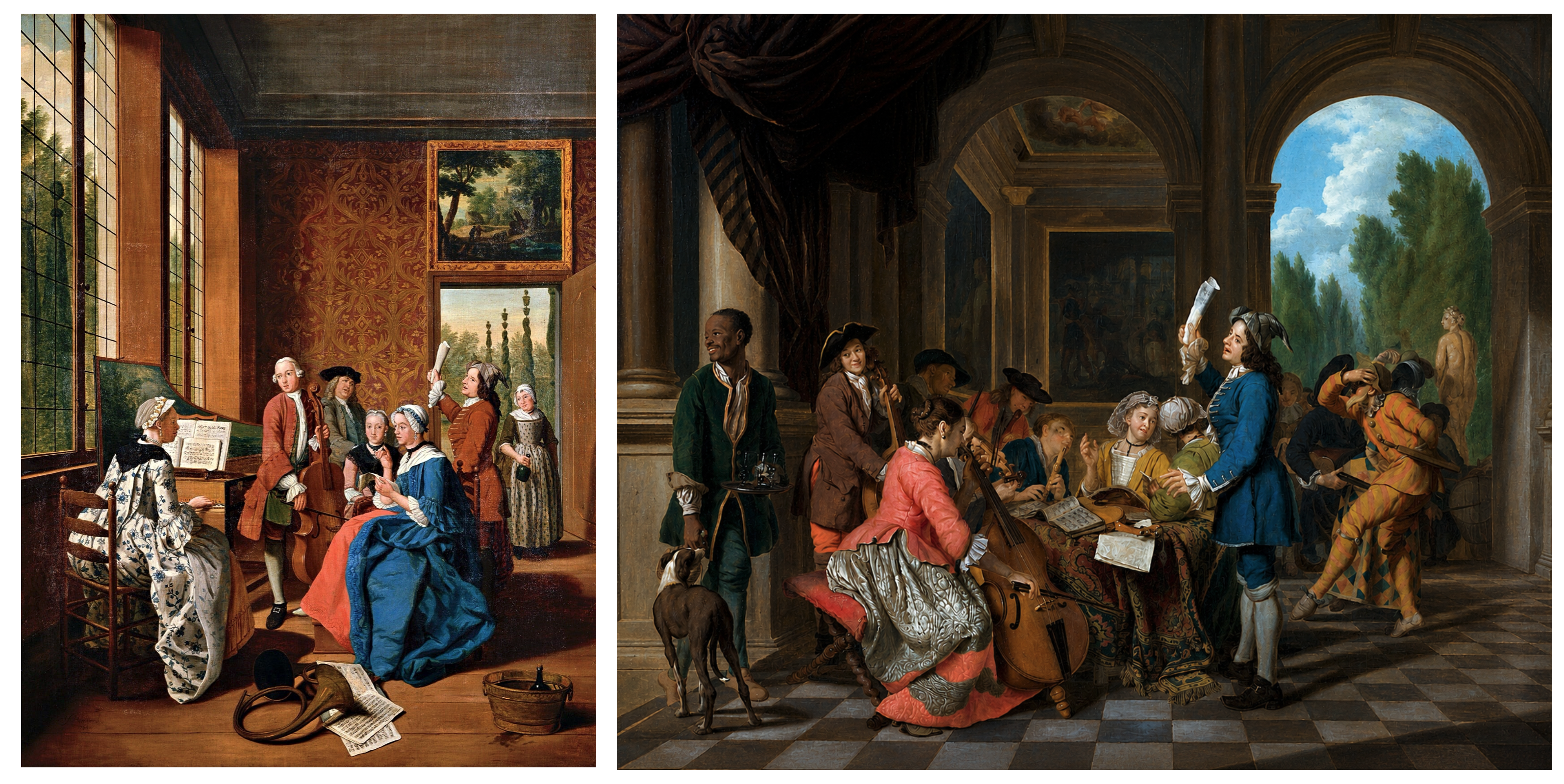
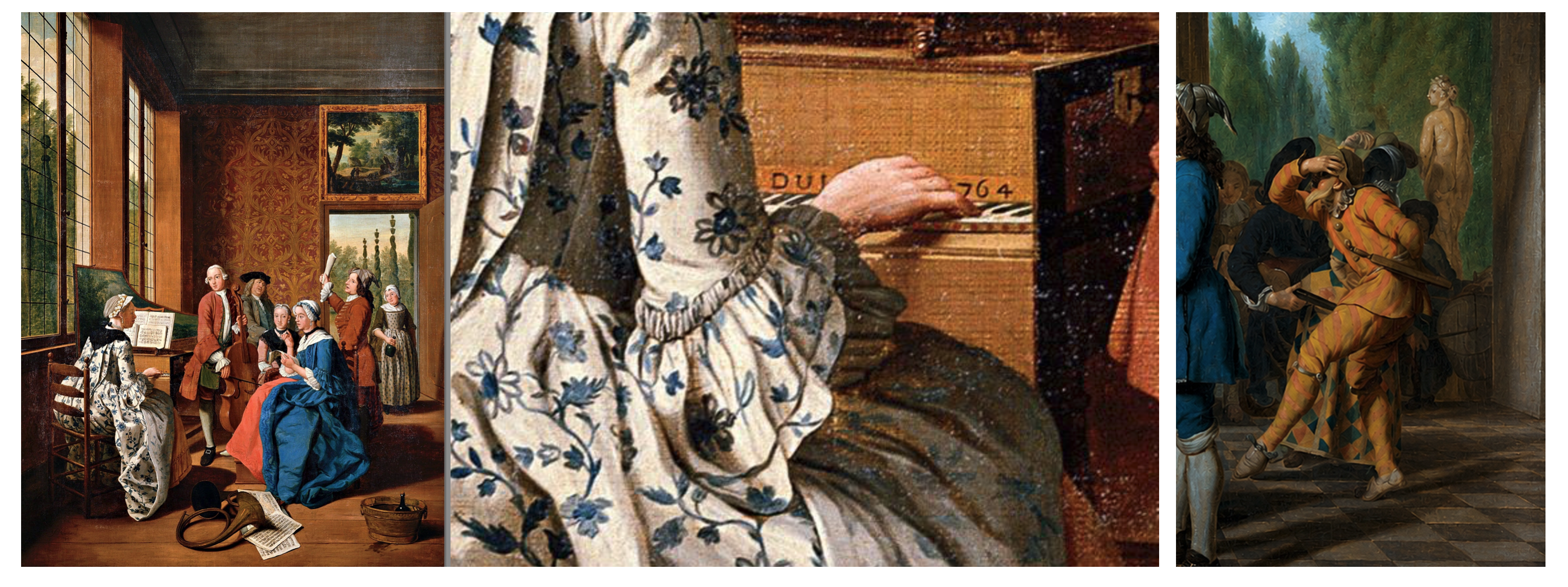
signed and dated lower left: J Horemans 1764 on the floor
Harpsichords and Harlequins: Commedia dell’arte and the Migration of the Dulcken Family (1764)
Hans Meijer
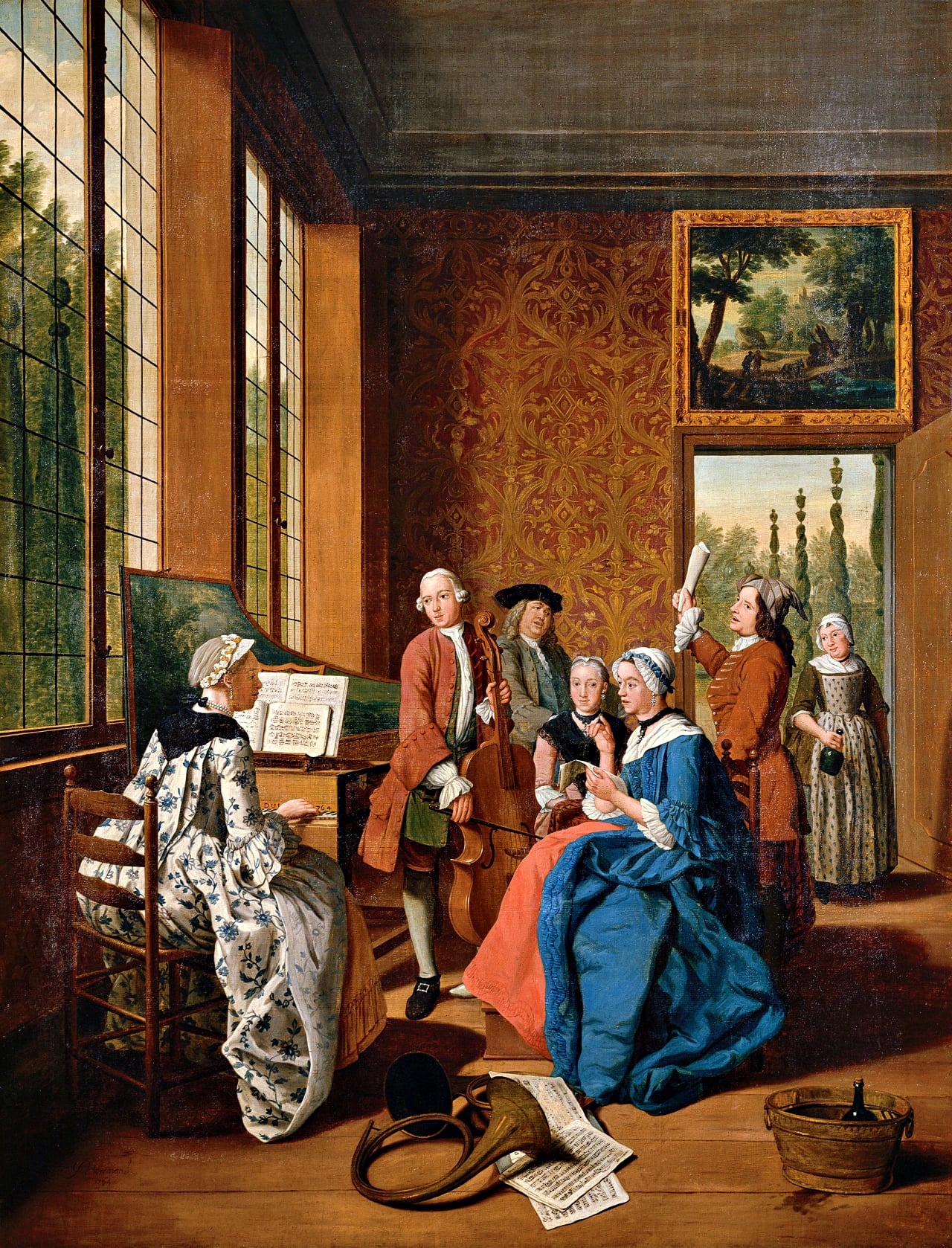
At first glance, the surviving paintings of the Antwerp genre artist Jan Josef Horemans II (1714–1792) seem to depict conventional, polite bourgeois scenes: well-to-do companies dedicated to the civilized art of domestic music-making. However, a deeper iconographic and musicological analysis of his 1764 masterpiece exposes a far more layered and dynamic scenario. During this period, the wealthy salons of the Antwerp elite served as the stage for a highly fashionable fusion of instrumental music, family biography, and improvised popular theater: the commedia dell’arte in an intimate domestic setting.
The Transnational Hub: Brussels and the Muntschouwburg
To understand this theatrical dynamic within the bourgeois salon, one must understand the 18th-century performance culture of the Austrian Netherlands. The commedia dell'arte—and the musical genres derived directly from it, such as opéra comique and opera buffa—was an absolute cultural craze at the time.
During the 18th century, Brussels served as a crucial European intersection for traveling theater troupes (comédiens itinérants). Archival records and official ordonnances from the Brussels municipal archives confirm that the Court of the Austrian Governors (most notably under the art-loving Governor-General Charles Alexander of Lorraine / Karel van Lorreinen) frequently granted performance licenses to French and Italian companies. The central stage for this culture was the Grand Théâtre de la Monnaie, founded in 1700. By the 1750s and 1760s, stock characters like Arlequin, Scaramouche, and Pantalon appeared before packed Brussels audiences on a weekly basis.
This theatrical mania quickly spread north to Antwerp's wealthy merchant class. While public theaters in Antwerp faced strict local regulations, affluent citizens simply brought the latest hits from the Brussels stage into their own private residences. They were no longer merely passive consumers of theater; they replicated the art form within their own homes.
Visual Codes: The Man in the Knotted Cap
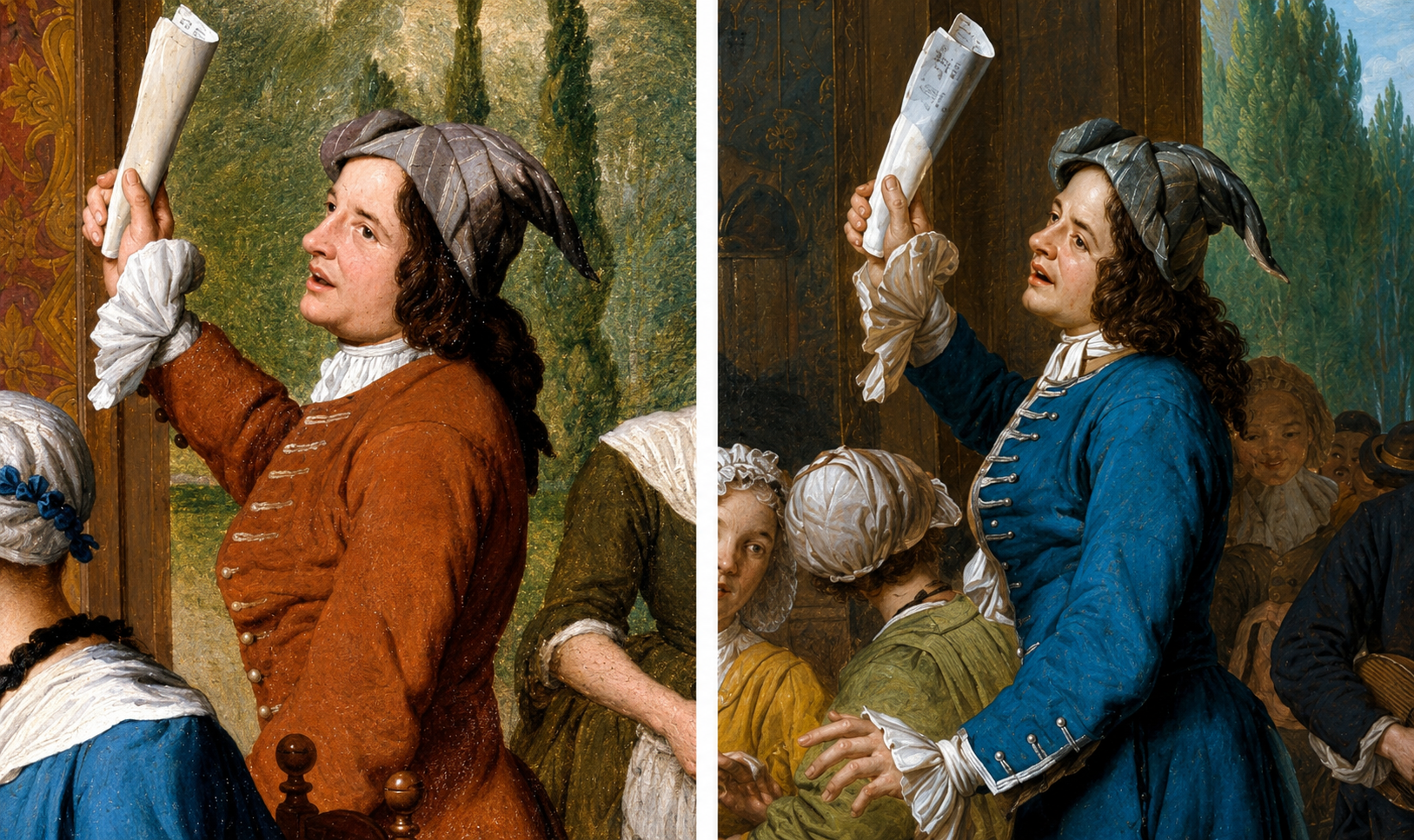
The first painting establishes the musical and structural framework of such a domestic performance. While the singers and actors were granted the freedom to solo and improvise, the instruments provided the formal boundaries. Within this operational synergy, the basso continuo—anchored here by a clear, resonant Antwerp Dulcken harpsichord—functioned as the invisible musical director dictating the dramatic pacing of the home theater. The harpsichordist reacted in real-time to the physical movements and declarations of the actors.
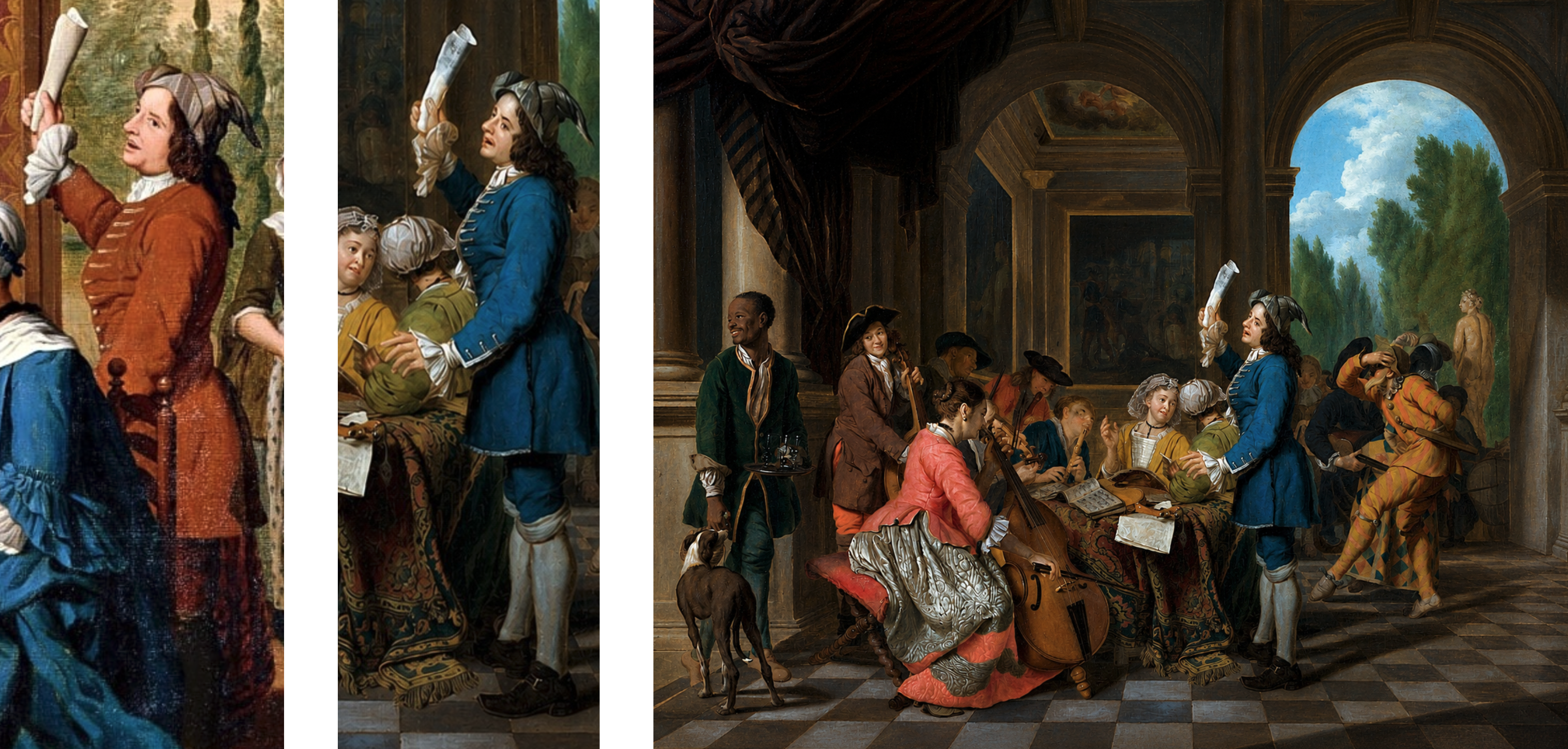
That we are not looking at a static concert is immediately signaled by the central singer/actor. He wears an expressively knotted kamermuts (the visual code for a witty, comic servant character like Pedrolino, Scapino or Brighella and practical culottes (knee breeches). These breeches granted the actor the necessary physical mobility to execute the expansive, dramatic strides required for theatrical improvisation. The rolled paper in his hand serves as his canovaccio (the plot outline) or libretto.
The Smoking Gun: Pantalone Invades the Salon
The definitive and most conclusive iconographic proof for this theatrical hypothesis is delivered by Horemans’ second painting. Here, the pure commedia dell’arte literally invades the musical salon in the guise of the stock character Pantalone.
Horemans renders this miserly, suspicious old Venetian merchant flawlessly according to theatrical tradition: the leather mask with its characteristic hooked nose and prominent pointed beard is unmistakable. Dressed in a striking striped rococo costume (a fashionable 18th-century variation of his traditional red attire) and equipped with the characteristic wooden slapstick (battacio) tucked behind his back, he executes a cautious, prowling theatrical step. Lifting his hat, he peers slyly into the room. Directly behind him, a fabric draped with the instantly recognizable green-and-yellow Harlequin diamond pattern further solidifies the theatrical context.
The Biographical Key: The Migration to Brussels (1764)
The most spectacular revelation lies within the exact dating of the canvas: 1764. This is not merely a fictitious domestic concert; it is a historical document capturing a major professional transition. Following the death of Joannes Daniël Dulcken, the family petitioned in 1763 to leave Antwerp. In 1764, the widow Dulcken, along with her son Joannes and her son-in-law, the painter Johann Hermann Faber, officially relocated to Brussels to establish a new harpsichord workshop. Remarkably, Faber was a direct pupil of Jan Josef Horemans II!
The painting essentially depicts the Dulcken family at the exact moment they were preparing to seek their fortune in the political and cultural capital. Their ultimate destination was the lucrative musical and theatrical market surrounding Charles Alexander of Lorraine, the Governor-General whose court in Brussels dictated the contemporary obsession with opera and who was a passionate patron of imported French and Italian performing arts.
Horemans’ composition ingeniously mirrors this artistic ambition: on the left sits the magisterial Dulcken harpsichord (signed 'DUL... 1764') as the ultimate symbol of their Antwerp craftsmanship. On the right, the vibrant theater world of Brussels—personified by the cunning commedia dell’arte archetype Pedrolino, Scapino or Brighella —literally invades the domestic space. The painting functions as a visual manifesto: the Dulcken family was leaving Antwerp for Brussels to embed their instruments directly into a cultural elite dominated by the fashionable, Franco-Italian theatrical tastes of the Brussels court.
The Dulcken harpsichord in the painting by Jan Jozef Horemans (1764)
A new interpretation of a remarkable detail
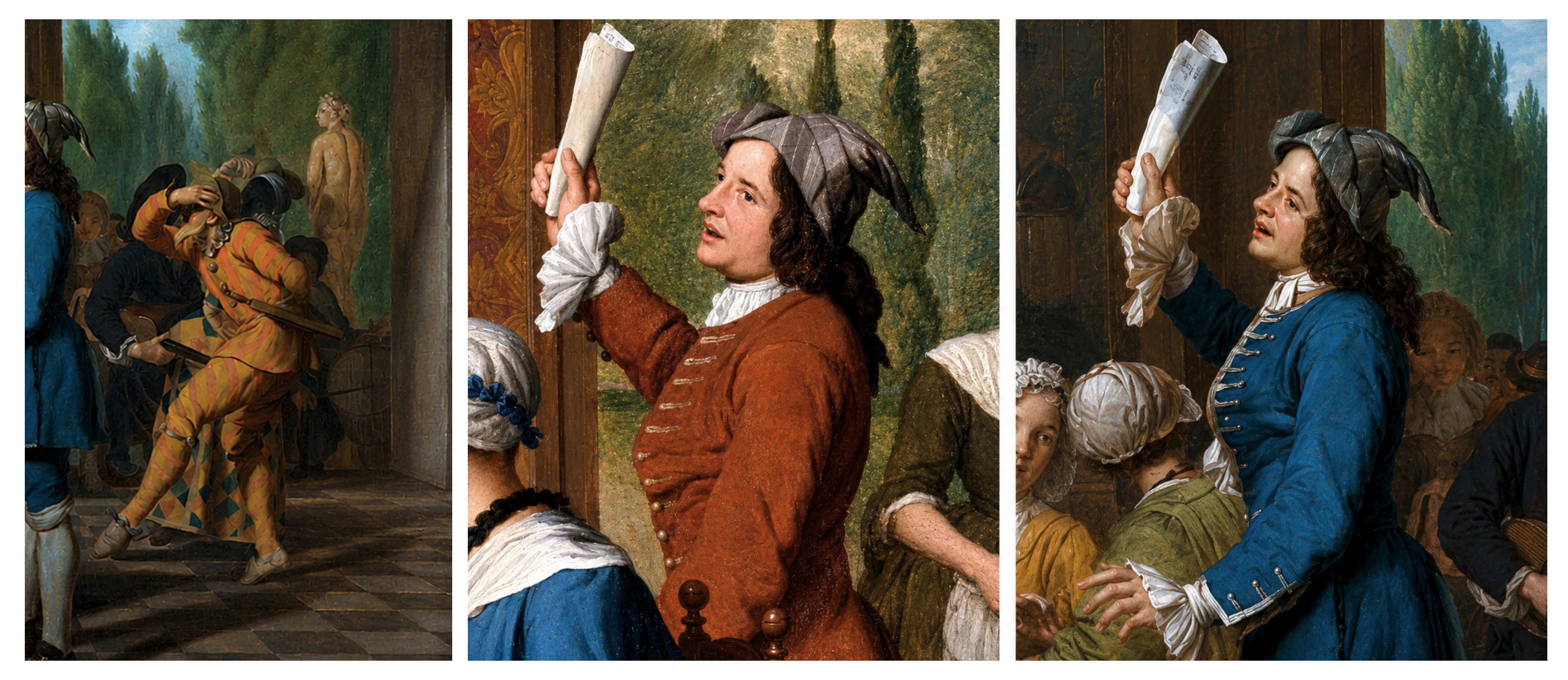
Left - The Smoking Gun: Pantalone Invades the Salon
Pantalone & Pedrolino, Scapino or Brighella
Klavecimbelbouw en Komedie: De Commedia dell’arte en de Migratie van de Familie Dulcken (1764)
Wie de overgeleverde schilderijen van de Antwerpse genreschilder Jan Josef Horemans II (1714–1792) oppervlakkig beschouwt, ziet vaak louter burgerlijke taferelen: een ingetogen gezelschap dat zich wijdt aan de beschaafde kunsten van de huismuziek. Een diepgaande iconografische en musicologische analyse van zijn meesterwerk uit 1764 legt echter een veel gelaagder en dynamischer scenario bloot. De rijke salons van de Antwerpse elite vormden in deze periode het decor voor een uiterst modieuze versmelting van high-end muziek, familiebiografie en geïmproviseerd volkstoneel: de commedia dell’arte in intieme huiskamerbezetting.
Het Transnationale Knooppunt: Brussel en de Muntschouwburg
Om de theatrale dynamiek binnen de burgerlijke salon te begrijpen, is inzicht in de 18e-eeuwse opvoeringspraktijk in de Oostenrijkse Nederlanden noodzakelijk. De commedia dell'arte — en de muzikale genres die daar direct uit voortvloeiden, zoals de opéra comique en de opera buffa — was destijds een ware rage.
Gedurende de 18e eeuw fungeerde Brussel als een cruciale Europese draaischijf voor reizende theatergezelschappen (comédiens itinérants). Archiefstukken en officiële ordonnanties uit de Brusselse stadsarchieven bevestigen dat het hof van de Oostenrijkse landvoogden (met name onder de kunstminnende landvoogd Karel van Lorreinen) aan de lopende band licenties verleende aan Franse en Italiaanse troepen. Het centrale podium voor deze cultuur was de Grand Théâtre de la Monnaie (de Muntschouwburg), opgericht in 1700. Tegen de jaren 1750 en 1760 stonden karakters als Arlequin, Scaramouche en Pantalon er wekelijks voor volle zalen.
Deze theatrale rage sloeg snel over naar de rijke koopmansklasse in Antwerpen. Terwijl openbare theaters in de Scheldestad aan strikte banden waren gelegd, haalden vermogende burgers de nieuwste theaterhits van het Brusselse toneel simpelweg naar hun eigen private residenties. Men keek niet langer alleen passief naar het theater, maar repliceerde de kunstvorm binnenshuis.
Visuele Codes: De Man met de Geknoopte Muts
Het eerste schilderij toont de muzikale en logistieke opbouw van zo'n huiskamervoorstelling. Waar de zangers en acteurs de vrijheid kregen om te soleren en te improviseren, zorgde het instrumentarium voor de formele kaders. Het is binnen deze operationele synergie dat de basso continuo — hier geleid vanaf een helder en dragend Antwerps Dulcken-klavecimbel — fungeerde als de onzichtbare muzikale regisseur die de wetten van het huistheater dicteerde. De klavecimbelspeler reageerde direct op de fysieke handelingen en declamaties van de acteurs.
Dat we hier niet naar een statisch concert kijken, wordt direct gecodeerd door de centrale zanger/acteur. Hij draagt een expressief geknoopte kamermuts (de visuele code voor een spitsvondig, komisch karakter zoals Pedrolino, Scapino of Brighella en een praktische culotte (kniebroek). Deze broek gaf de acteur de noodzakelijke fysieke bewegingsvrijheid om de expressieve, grote stappen van de theater-improvisatie uit te voeren. Het opgerolde papier in zijn hand fungeert hierbij als zijn canovaccio (het scenario) of libretto.
De 'Smoking Gun': Pantalone Stormt Binnen
De definitieve en meest sluitende iconografische bewijsvoering voor deze theatrale hypothese wordt geleverd door het tweede schilderij van Horemans. Hier breekt de pure commedia dell’arte de muzikale salon binnen in de gedaante van het archetype Pantalone.
Horemans portretteert deze gierige, achterdochtige oude Venetiaanse koopman feilloos volgens de wetten van het theater: het lederen masker met de karakteristieke haakneus en prominente puntbaard is onmiskenbaar. Gekleed in een opvallend gestreept rococo-kostuum (een modieuze 18e-eeuwse variatie op zijn traditionele rode pak) en uitgerust met de karakteristieke houten klapstok (battacio of slapstick) achter zijn rug, voert hij een behoedzame, bespionerende theaterpas uit. Hij tilt zijn hoed op en gluurt listig de ruimte in. Direct achter hem versterkt een doek met het herkenbare groen-gele Harlekijn-ruitenpatroon de theatrale context.
De Biografische Sleutel: De Migratie naar Brussel (1764)
De meest spectaculaire ontdekking schuilt echter in de exacte datering van het schilderij: 1764. Dit is niet zomaar een fictief interieurconcert, maar een historisch document van een cruciale 'marktverschuiving'. Na het overlijden van Joannes Daniël Dulcken vroeg de familie in 1763 toestemming om Antwerpen te verlaten. In 1764 verhuisde de weduwe Dulcken samen met haar zoon Joannes en haar schoonzoon, de schilder en instrumentenmaker Johann Hermann Faber, naar Brussel om daar een nieuw high-end klavecimbelatelier te openen. Faber was nota bene een directe leerling van Jan Josef Horemans II!
Het schilderij toont de familie Dulcken op het exacte moment dat zij zich klaarmaken voor vertrek naar het Brusselse machtscentrum. Hun doel? De muzikale en theatrale markt rondom Karel van Lorreinen, de landvoogd die in Brussel een ongekende operagekte dicteerde en een fervent liefhebber was van de geïmporteerde Franse en Italiaanse cultuur.
De compositie weerspiegelt deze ambitie op geniale wijze: links zien we het magistrale Dulcken-klavecimbel (gesigneerd 'DUL... 1764') als symbool van hun Antwerpse vakmanschap. Rechts stormt de theaterwereld van Brussel — gepersonifieerd door Pedrolino, Scapino of Brighella uit de commedia dell’arte — letterlijk de kamer binnen. Het schilderij fungeert daarmee als een visueel manifest: de Dulckens verruilden Antwerpen voor Brussel om hun instrumenten direct te leveren aan een cultuurwereld die gedomineerd werd door de theatrale, Frans-Italiaanse mode van het Brusselse hof.
Het Dulcken-klavecimbel in het schilderij van Jan Jozef Horemans (1764)
Een nieuwe interpretatie van een opmerkelijk detail
Snijders & Rockoxhuis
signed and dated lower left: J Horemans 1764 on the floor
J Horemans 1764 !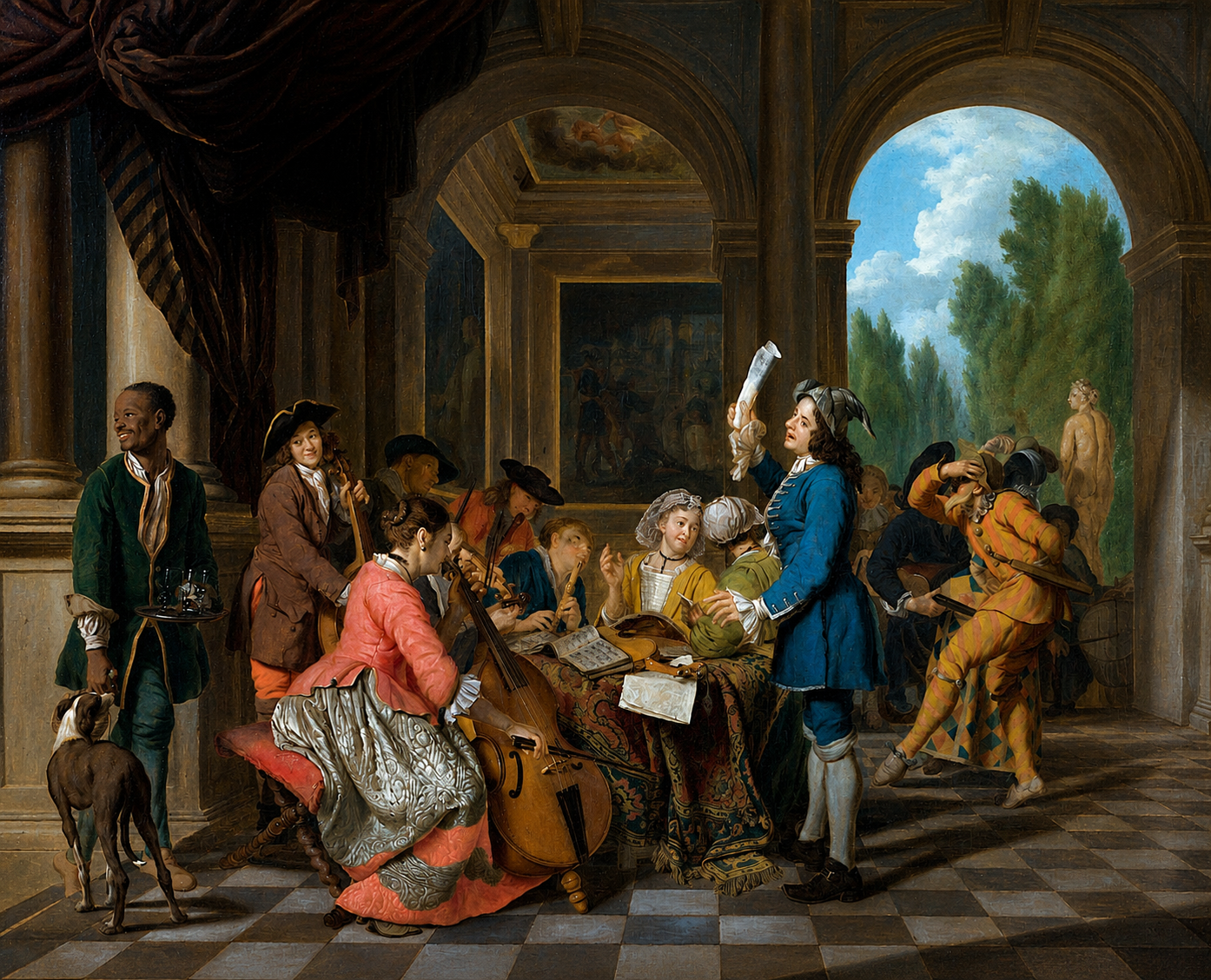
Private collection
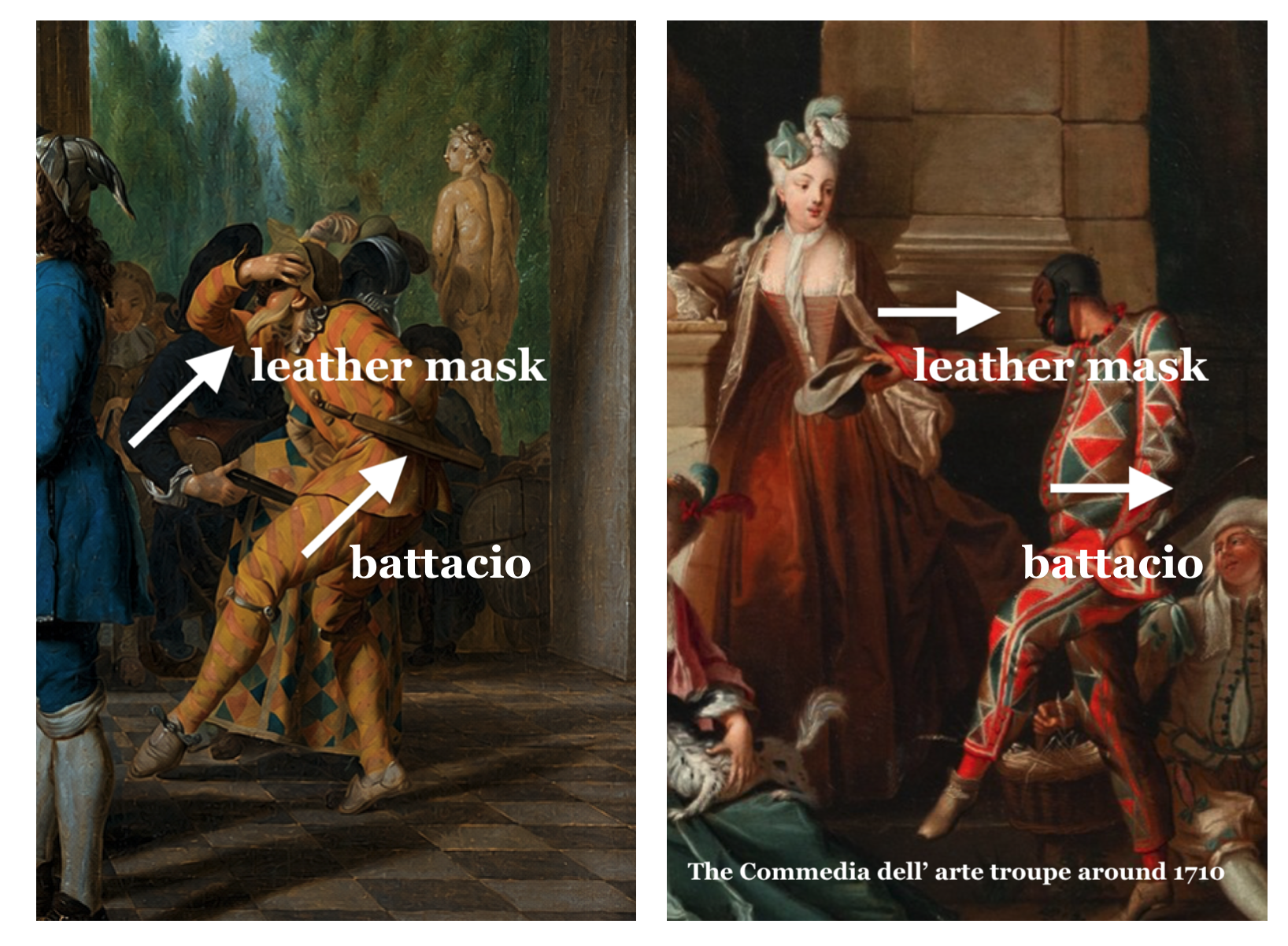
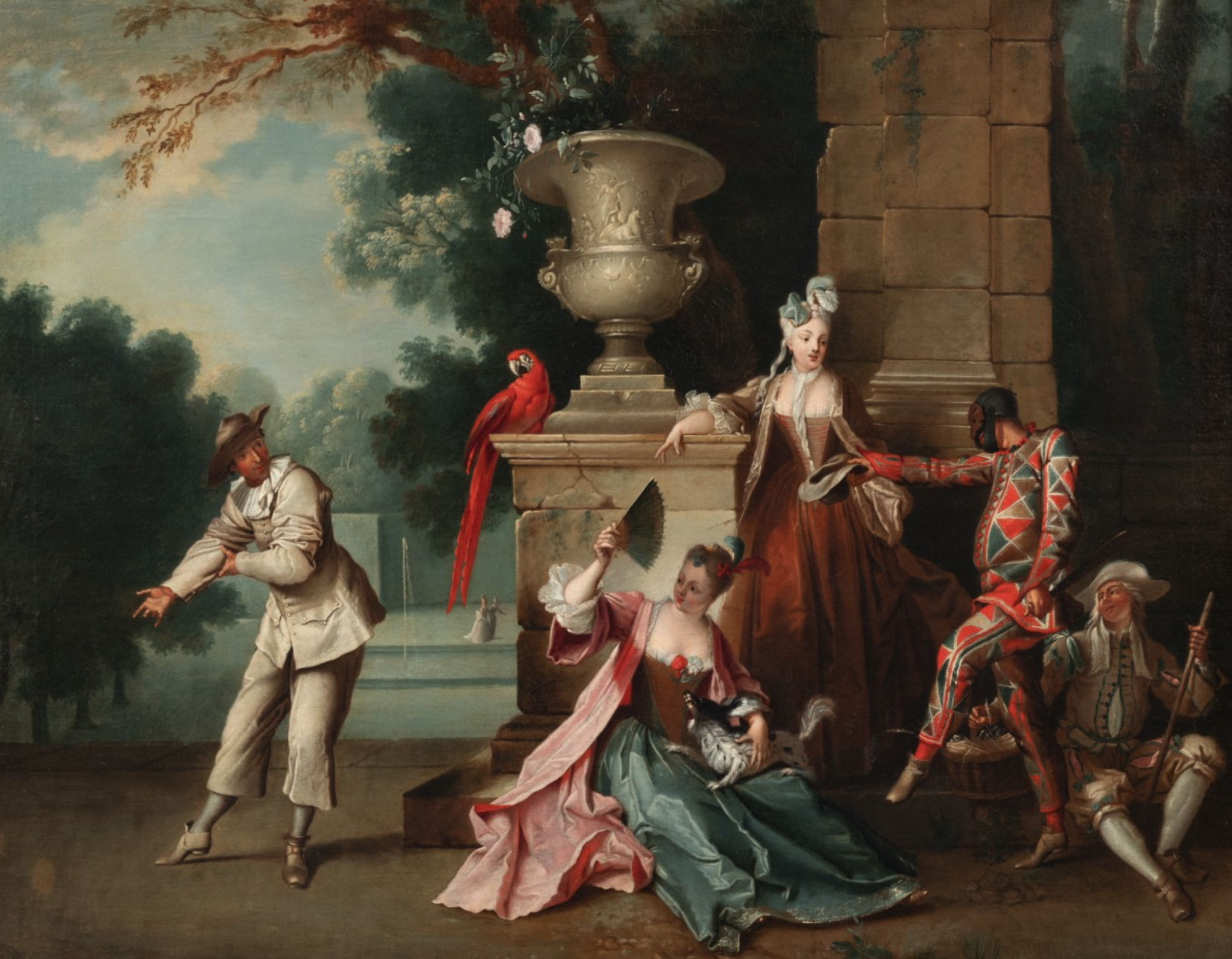
The Commedia dell’ arte troupe around 1710
Beautiful oil on canvas representing the commedia dell’arte theater troupe.
The gallant scene takes place in the grounds of a castle, at the foot of an imposing stone base which supports a marble Medici vase.
The five actors are richly dressed, on the right Léandre is peacefully seated and observes Harlequin who tries to charm his Columbine, while his lover, Isabelle, is turned towards Pierrot, who seems to invite her to dance with gestures of the hand.
In the center, perched on an edge of the base, a very beautiful Scarlet Macaw parrot contemplates the scene; while in the background, a loving couple walks near the jet of water from a fountain.
Period :18th century
Provenance :France-Paris
Medium :Oil on canvas
Dimensions : l. 36.61 inch X H. 29.92 inch