Foundation Musick's Monument
From Hermit’s Chapel to Military Lookout: The Stiftskirche St. Goar until 1734
Situated on the banks of the Middle Rhine, the Stiftskirche of Sankt Goar stands as a monument to the turbulent history of the Rhineland. Before the church was scarred by fires in the late eighteenth century, the building experienced twelve centuries of deep devotion, architectural flowering, and fierce sieges. A reconstruction of the history of this remarkable church, with the year 1734 serving as a historical turning point.
The Legacy of Saint Goar (6th – 11th Century)
The foundations of the church lie in the Early Middle Ages. Around the year 550, Saint Goar of Aquitaine settled on this spot as a hermit. He founded a hospitium for travelers and spread Christianity throughout the region. Following his death in 575, his grave quickly became a bustling place of pilgrimage.
King Pepin the Short gifted the chapel to the Prüm Abbey in 765. Following a devastating fire in 1137, the church was rebuilt as a noble collegiate chapter (Chorherren-Stift). The current crypt dates from this early Romanesque period. This three-aisled underground space is considered one of the best-preserved Romanesque crypts in the entire Rhineland.
The Power of Katzenelnbogen (1185 – 1527)
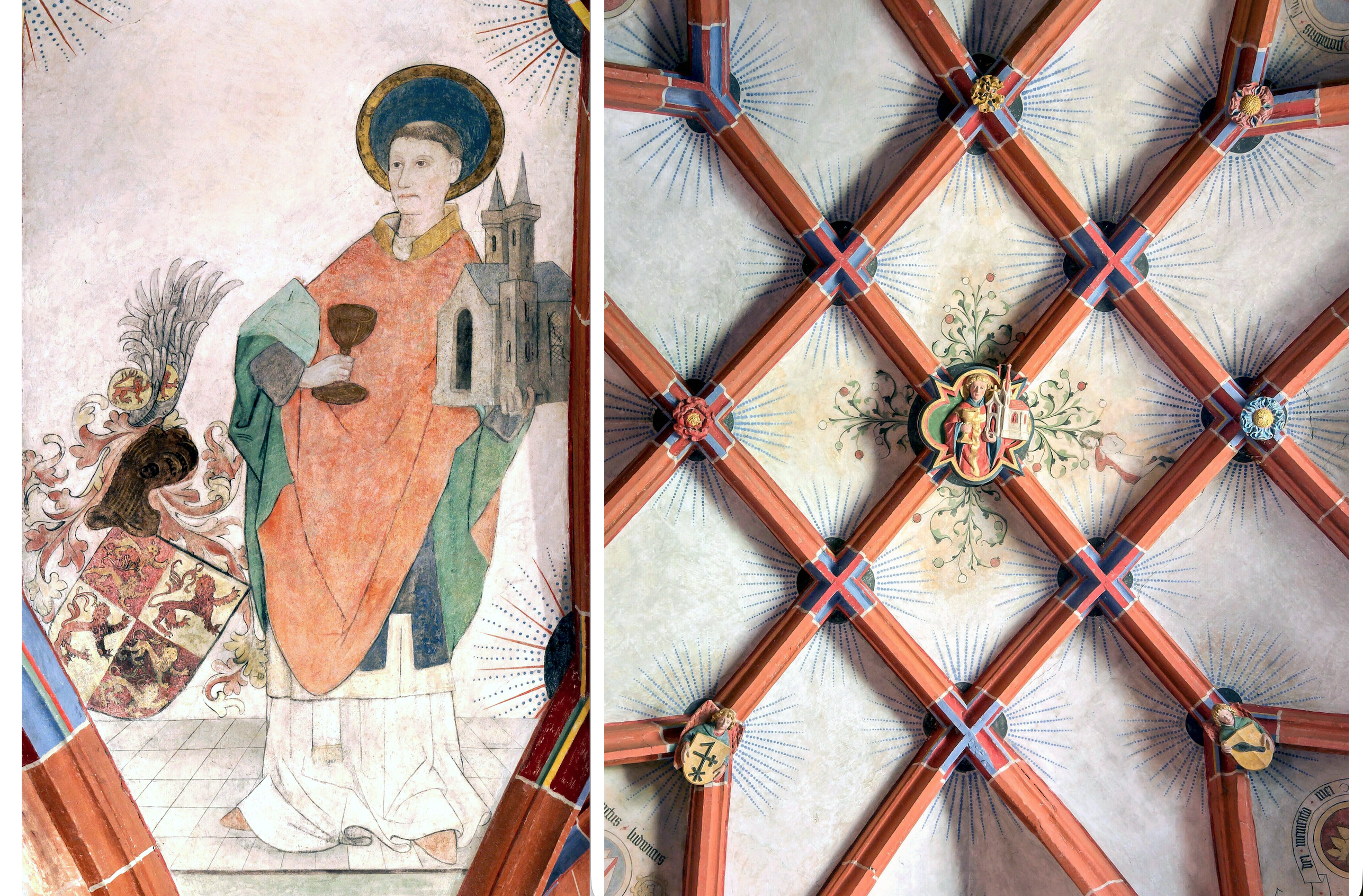
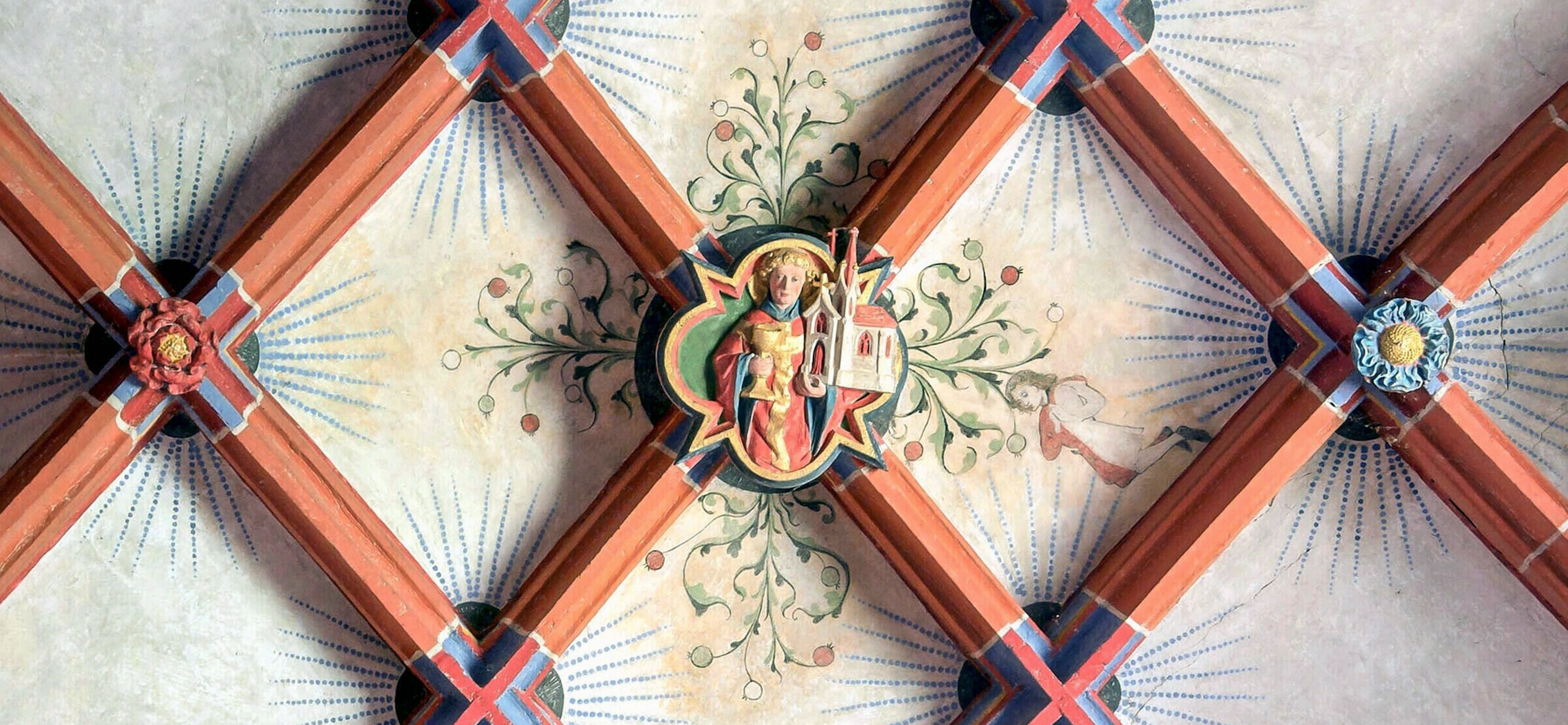
In 1185, the influential Counts of Katzenelnbogen acquired the advocacy (Vogtei) over the church and the town. Under their rule, the Stiftskirche underwent a dramatic transformation. In 1444, Count Philipp of Katzenelnbogen commissioned a large-scale renovation. The old Romanesque nave made way for a magnificent, Late Gothic nave featuring an impressive net vault and a stone pillar-pulpit.
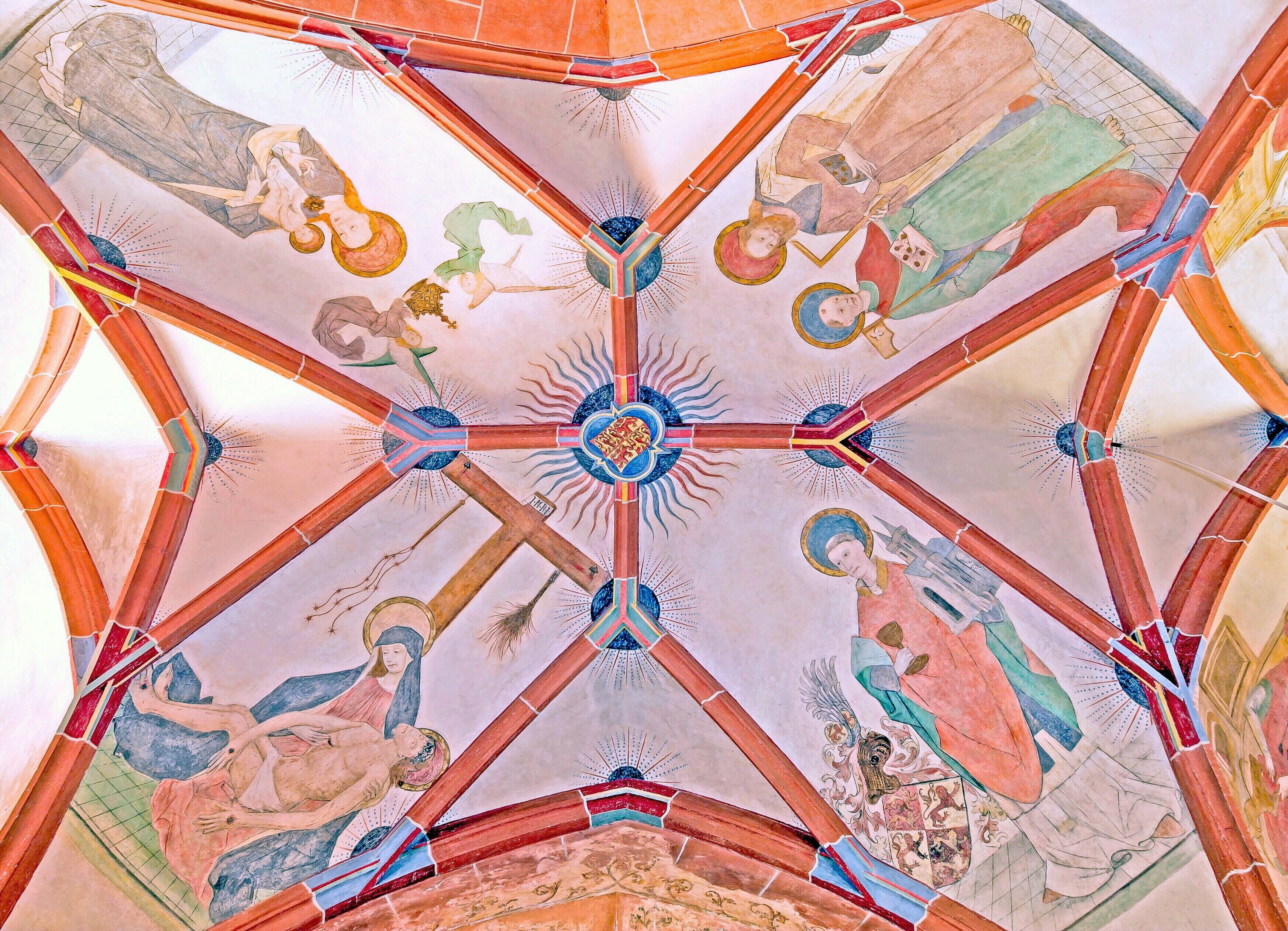
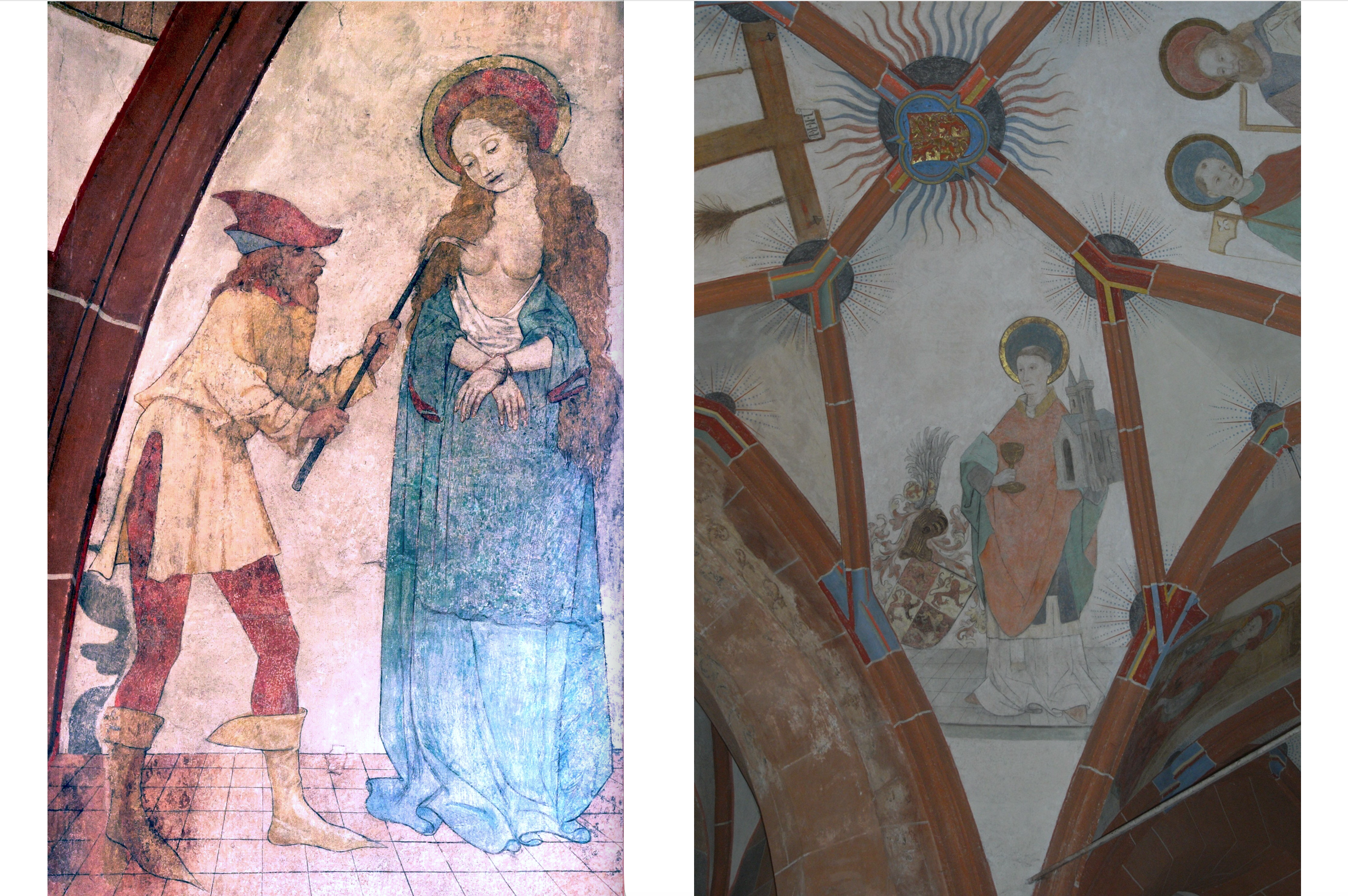
Between 1469 and 1489, the interior was additionally adorned with vibrant frescoes. These unique, Late Gothic wall paintings survived the test of time and constitute the most important historical treasure in the region today.
The Reformation and the Hessian Period (1527 – 1700)
A profound turning point arrived in 1527. Landgrave Philip I of Hessen introduced the Reformation. The Catholic chapter was dissolved, and the Stiftskirche was transformed into a Protestant house of worship. Consequently, the congregation of St. Goar is the oldest Protestant church community in the Rhineland. The interior was adapted to meet the needs of the new Protestant liturgy. From this era, the church houses, among other things, the monumental tomb monuments of Landgrave Philip II of Hessen-Rheinfels and his wife.
During the Thirty Years' War (1618–1648), the town changed hands multiple times and the region was heavily damaged by the fighting between Catholic imperial troops and Protestant armies. The town's strategic location on the Rhine, directly beneath the mighty fortress of Burg Rheinfels, meant that the church was always on the front line.
A Hasty Advent Wedding Before the Storm (1733)

Heiratseintrag Johann Daniel Dülcken und Susanna Maria Knüpfelin transcriptie Dr. Johannes Burkardt
2. Heiratseintrag Johann Daniel Dülcken und Susanna Maria Knüpfelin - transcriptie Dr. Johannes Burkardt
17. [Decem]ber * Sindt H[er]r Johann Daniel Dülcken, Kauff- u[nd] Handels=mann,
H[errn] Pfarrers Dül=
ckens zu Winches=hausen (sic!) in der Graffschafft Berlenburg
Ehel[icher] Sohn, u[nd] J[ung]fer
Susanna Maria Knüpfelin, des weyland H[errn] Johann Conrad Knüpfels
gewesenen proviant=Com[m]issarii u[nd] Stiffts=Kellers allhie,
nachgelasene Ehel[iche]
Tochter, copuliret u[nd] den 23 t[en] augusti hui[us] anni zum
I stenmal p[ro]clamiret word[en].
* Darunter Eintrag mit blasserer Tinte, aber von gleicher Hand: „16. hui[us] de infra. N[ota] B[ene].“
By the early 1730s, the threat of a new European conflict was already hanging in the air. Tensions surrounding the War of the Polish Succession were escalating rapidly. Amidst this atmosphere of uncertainty, a memorable personal event took place within the walls of the Stiftskirche.
On December 17, 1733, the merchant Johannes Daniel Dulcken and Susanne Maria Knoppffel (Knöpffel) were joined in holy matrimony. It was a hastily arranged Advent wedding. Susanne was the daughter of the late Johann Conrad Knöpffel, who had served for years as the Proviant-Commissair of Burg Rheinfels and Stift-Kellner, acting as the vital link between the military logistics and the ecclesiastical administration of Sankt Goar. This marriage highlighted the deep ties between the church and the local administrative and military elite, just months before war would engulf the town.
The War Year of 1734: The Church as a Military Shield
Only a few months after the wedding, disaster struck. In 1734, the hostilities of the War of the Polish Succession officially erupted in the Rhineland. A French force composed of dragoon and infantry regiments advanced toward the Rhine and laid siege to the overarching Rheinfels fortress and the town of Sankt Goar.
Due to its massive, elevated west tower, the Stiftskirche regularly functioned during these months of war as a strategic lookout point for the Hessian defenders. Riflemen utilized the church windows and the tower to thwart enemy movements on the Rhine and the surrounding hills. Although the French assault in 1734 was repelled due to the steadfastness of the garrison, this year heralded a restless final chapter. While the Stiftskirche survived the siege of 1734 unscathed, the military pressure continued to mount. It would be one of the last times that the medieval structure of the town and its church held firm before facing a heavy path of destruction in the late eighteenth century.